Big Blue Lilyturf Blooms: Color, Timing and How Long They Last
Big Blue Lilyturf (Liriope muscari 'Big Blue') is prized as much for its reliable violet-purple flower spikes as for its dark green foliage. If you are growing this plant and wondering when those flowers will appear, what they will look like, or how to encourage the best display, you are not alone. Understanding the bloom cycle of Big Blue Lilyturf helps you plan your garden timing, set realistic expectations, and know whether you need to adjust your care routine.
What Big Blue Lilyturf Blooms Look Like
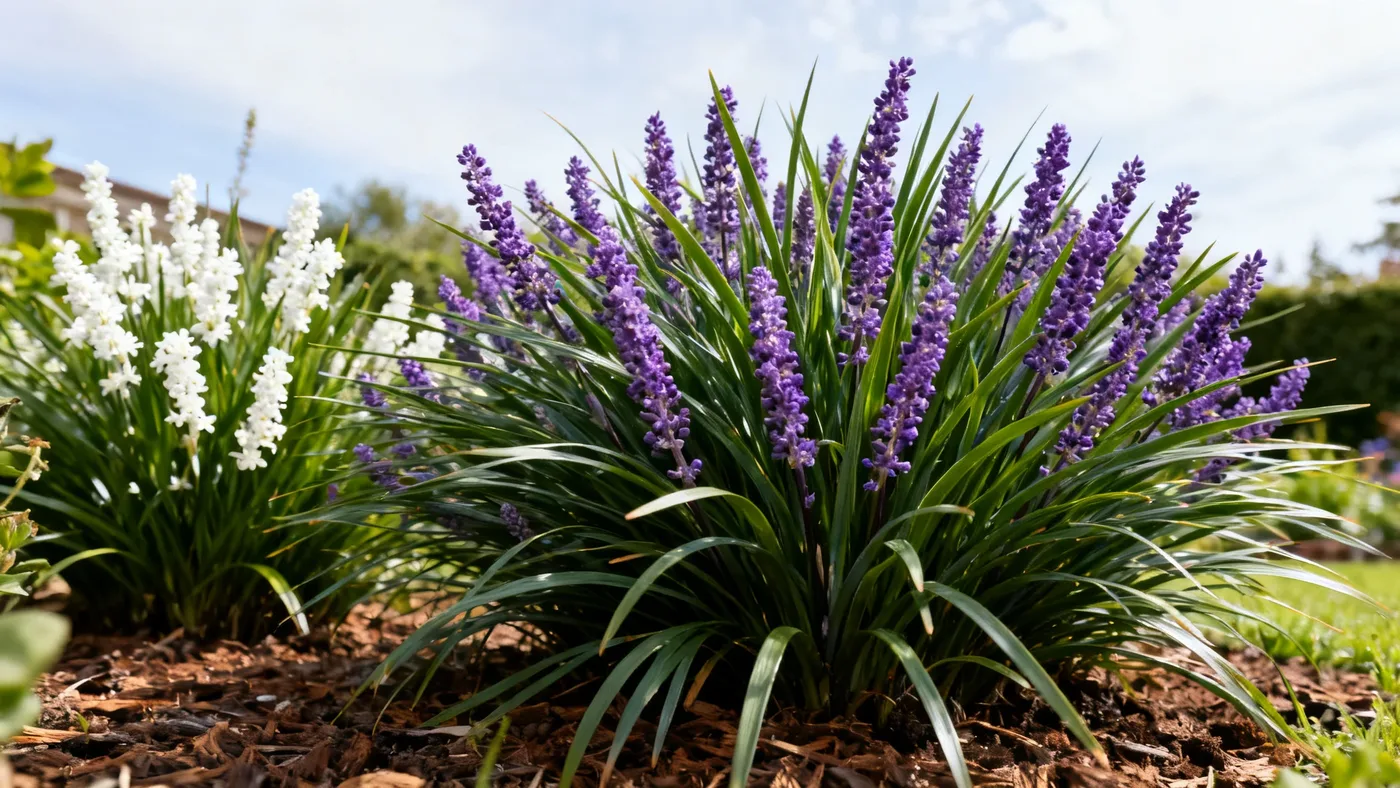
Big Blue Lilyturf produces distinctive violet-purple flower spikes that rise above the plant's arching, strap-like foliage. The bloom spikes typically grow 6 to 12 inches above the foliage, reaching a total height of about 18 to 24 inches when the plant is in full flower. Each spike is densely packed with small, tubular florets arranged in a compact, almost grape-like cluster, which is why the botanical name includes the word "muscari" (grape hyacinth).
The color is a true violet-purple, not pink or blue, and holds its tone well throughout the bloom period. Occasionally, white-flowered forms appear naturally, though the Big Blue cultivar specifically stays true to its purple color. The flowers have a faint fragrance that is not a significant landscape feature, so do not expect a strong perfume from these blooms.
Once flowers fade, they develop into small black berries that persist into winter and are eaten by birds, adding another layer of wildlife value to your planting.
When Big Blue Lilyturf Blooms
Big Blue Lilyturf blooms in mid to late summer, typically from July through August in most regions. Exact timing varies by location, day length, and growing conditions. In warmer zones (7-10), where the plant stays fully evergreen, blooms often appear reliably around mid-July. In colder zones (5-6), where the plant may die back or brown in winter, bloom time may shift slightly later or emerge once the plant has established itself fully.
The big blue lilyturf bloom time is triggered by day length and soil warmth, so gardeners in different regions should expect some variation. A plant growing in part shade may bloom slightly later than one in full sun, since shade slows the plant's seasonal warming cycle.
If your plant is newly installed, expect blooms during its first full growing season after planting, though very young plants sometimes focus energy on root establishment rather than flowering. Established plants, typically reaching full mature clump size around 2 to 3 years after planting, produce more abundant flower spikes year after year.
Conditions That Support Strong Blooms
Big Blue Lilyturf is resilient and flowers readily in most growing situations, but a few conditions tip the scales toward more abundant blooms and deeper color.
Light and Foliage Density
This plant blooms reliably in full sun to full shade, but foliage color and density are best in part shade. Part shade (roughly 4 to 6 hours of direct sun per day) often produces the most vibrant purple flowers, as the plant receives enough light to flower heavily without the stress that sometimes causes leaf scorch in intense afternoon sun. Full shade is acceptable and plants will still flower, though the bloom display may be less prolific than in part shade.
Soil and Water
Big Blue Lilyturf tolerates average, well-drained soil and adapts to clay soils without complaint. It prefers slightly acidic to neutral soil (roughly pH 6.0 to 7.0). Water the plant regularly during its growing season (spring through early fall) until it is established, roughly 1 growing season after planting. Once established, the plant is highly drought tolerant and requires only moderate, average water during the growing season.
Avoid soggy, poorly drained soil, as this can lead to root rot and crown rot, which prevent flowering entirely. If your soil is heavy clay, amend the planting area with compost to improve drainage.
Fertilizer
A light application of general-purpose or slow-release fertilizer in spring supports healthy foliage and robust flowering. The plant tolerates lean soil well, so heavy feeding is not necessary. Over-fertilizing, especially with high-nitrogen products, can produce excessive foliage at the expense of flowers.
How Long Big Blue Lilyturf Blooms Last
The liriope bloom display typically lasts 4 to 6 weeks from first flower to full seed set, depending on weather. Hot, dry summers may shorten the bloom period slightly, while cool, moist summers can extend it. The individual florets on each spike open over a period of 2 to 3 weeks, so even a single spike provides extended color. A mature plant with multiple spikes creates a continuous bloom display across the plant for the full 4 to 6 week window.
How long do liriope blooms last in the landscape overall? Once flowers fade and berries form, the seed heads themselves are attractive for several weeks before dropping. In colder zones (5-6), where foliage may brown in winter, the dried flower spikes persist and can add winter structure to the garden. In zones 7-10, where the plant remains green, the contrast between green foliage and spent flower spikes becomes less prominent, though some gardeners appreciate the texture.
Pruning and Aftercare
To prepare Big Blue Lilyturf for the next growing season and its next bloom cycle, cut back or mow the old foliage to a few inches in late winter or early spring, before new growth emerges. This pruning is technically optional and not required every year if you accept a less tidy appearance, but it improves the plant's appearance significantly and removes any winter-damaged foliage, particularly in colder zones.
Do not deadhead spent flower spikes if you want to enjoy the berries or wish to let the plant self-seed. If you prefer a neater appearance during the bloom season, remove spent spikes as they fade to encourage the plant to produce more flowers, though Big Blue Lilyturf is usually generous with blooms anyway.
Common Bloom Problems and Solutions
| Problem | Likely Cause | Solution |
|---|---|---|
| Few or no flowers, abundant foliage | Excess shade, overwatering, or high-nitrogen fertilizer | Move plant to part shade if possible; reduce water; use balanced or low-nitrogen fertilizer |
| Wilted or yellowing foliage, no blooms | Waterlogged soil or crown rot | Improve drainage; check for soft or blackened base of plant; divide and replant healthy portions only |
| Pale purple flowers or bleached foliage | Too much direct sun stress | Provide afternoon shade or dappled light; increase water during heat waves |
| Small or sparse flower spikes (young plant) | Plant not yet mature or energy diverted to root establishment | Wait 1-2 more seasons; established plants (2-3 years old) produce denser spikes |
When Big Blue Lilyturf Bloom Time Arrives: Your Checklist
- Early summer (June): Ensure plant is receiving adequate water and part to full sun exposure.
- Mid-summer (July): Watch for first flower buds to emerge; note the date for your region's typical bloom time.
- Bloom period (July-August): Enjoy violet-purple spikes; allow pollinators to visit; do not apply pesticides if possible.
- Late summer (August-September): Monitor for fade; observe berry formation; let seed heads persist if desired.
- Fall cleanup (September-October): Leave berries for birds; take notes on bloom density and color for reference next year.
- Late winter (February-March): Cut back old foliage to a few inches before new growth emerges; prepare for the next cycle.
Growing Big Blue Lilyturf Purple Flowers Year After Year
Big Blue Lilyturf is a long-lived perennial, commonly persisting 10 or more years with basic care. The more consistently you provide part shade, well-drained soil, and moderate water during the growing season, the more reliably the plant will produce its signature violet-purple flower display each mid to late summer. In zones 5-6, expect some variation due to winter damage, and allow the plant to recover fully before expecting peak bloom. In zones 7-10, where the plant stays evergreen, the cycle is more predictable year to year.
For comprehensive guidance on caring for your plant year-round and supporting both foliage and flower production, see our Big Blue Lilyturf care guide on sun, soil, water and more.
Quick Reference: Big Blue Lilyturf Bloom Cycle
| Aspect | Detail |
|---|---|
| Bloom color | Violet-purple spikes |
| Bloom time | Mid to late summer, July-August (varies by region) |
| Bloom height | Spikes rise 6-12 in. above foliage, plant reaches 18-24 in. when blooming |
| Bloom duration | 4-6 weeks per plant from first flower to seed set |
| First bloom (new plant) | Often in first full growing season after planting |
| Peak bloom (mature plant) | 2-3 years after planting; most abundant and dense |
| Best sun for blooms | Part shade; blooms in full sun to full shade |
| Soil pH preference | Slightly acidic to neutral (roughly 6.0-7.0) |
| Aftercare | Cut back old foliage in late winter/early spring before new growth |
| Winter in cold zones (5-6) | Foliage may brown or die back; new growth emerges in spring |
| Winter in mild zones (7-10) | Foliage stays evergreen; blooms appear reliably each summer |