Can You Grow Big Blue Lilyturf From Seed?
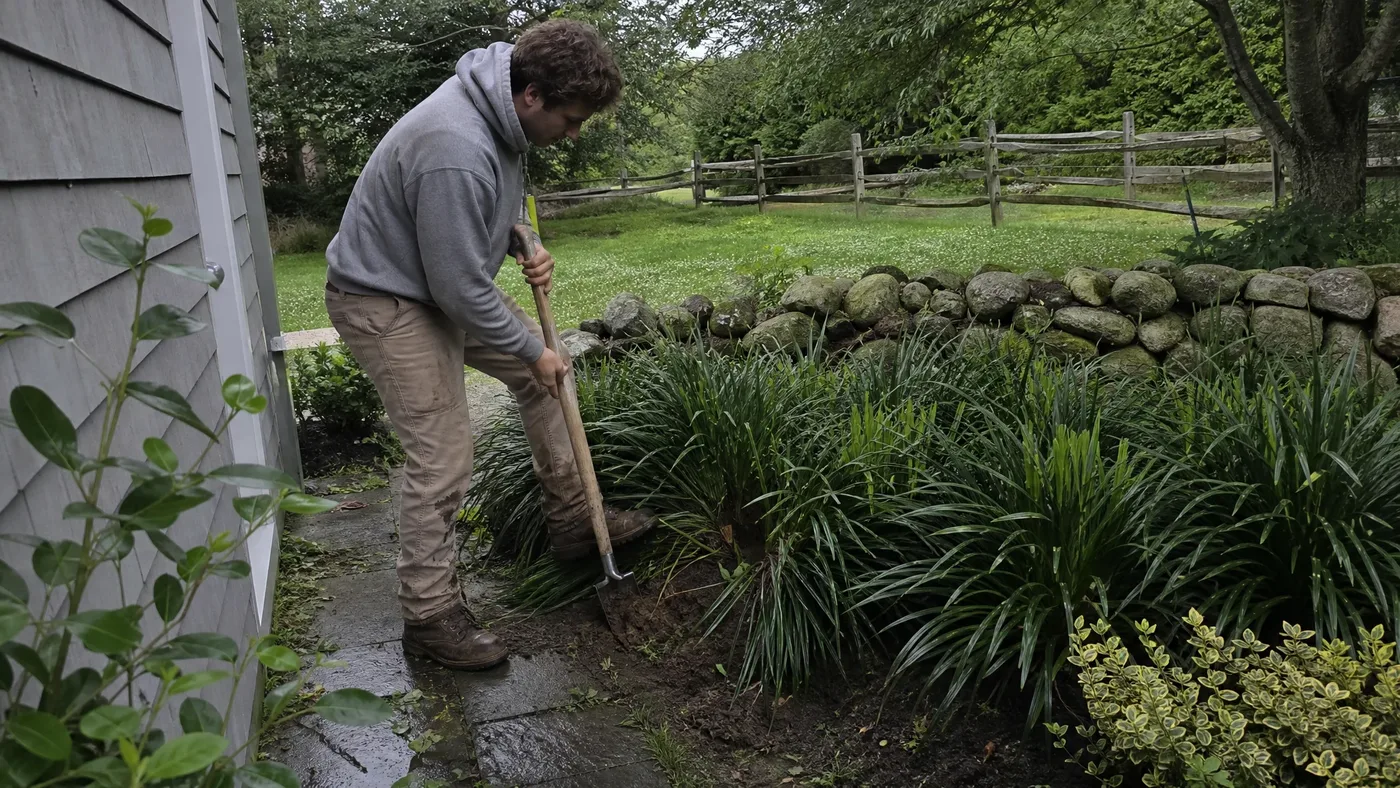
Every three or four years, a Big Blue lilyturf clump has grown thick enough to dig up and split into new plants. That is the number that matters here, because it tells you how this plant expects to multiply, and the answer is not seed. Under the arching leaves, the clump does the work on its own, one crown at a time.
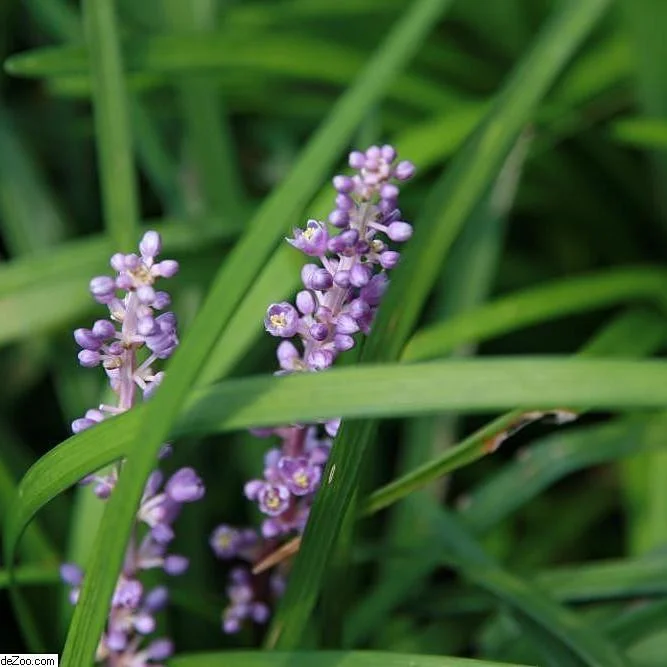
Search for Big Blue lilyturf seeds and you will find packets that carry the name. A packet like that will give you lilyturf, but not reliably the dense, dark-leaved, violet-spiked plant you are picturing.
This guide covers everything you need to know about starting Big Blue from seed, from how the clump grows and why seedlings stray from the parent to sowing steps, realistic waiting times and the faster routes of division and buying a plant.
How a Lilyturf Clump Makes More of Itself
Picture a Big Blue clump in early autumn: a fountain of narrow, leathery, dark green leaves about a foot to 18 inches tall and just as wide, with violet flower spikes standing up through the foliage. Everything you see is the visible top of a very organized structure underground.
Tuberous Roots Under the Leaves
Big Blue is an evergreen tuberous perennial forming a dense clump. Tuberous means the roots carry swollen storage along their length, a reserve of water and energy the plant draws on. That reserve is part of why a clump looks so settled, with leaves that stay dark and upright through winter.
New crowns form at the base of the existing ones. Each crown sends up its own tuft of leaves and grows its own roots, so the clump thickens from the inside and widens a little each year, like a slow ring of ripples.
A Polite Spreader
Clemson notes that Big Blue has less of a tendency to spread by stolons than many other liriopes. NC State adds that it is normally not necessary to propagate liriope because the plants are aggressive growers, though Liriope muscari is less aggressive than Liriope spicata. Big Blue sits at the gentler end of that range, which is exactly why it makes tidy edging.
That slow, steady widening is the plant's whole multiplication strategy. It makes exact copies of itself, close to home, without a single seed involved. Seed is the odd route for this plant, not the normal one, and the next section explains why that matters.
Why Big Blue Lilyturf Seedlings Won't Match the Parent
Big Blue is a cultivar. Someone picked out one plant for its dense habit and deep violet spikes, and every Big Blue since has been a piece of that plant, divided and divided again. Division copies the parent. Seed does not.
Clones Versus Seedlings
Each seed is a fresh shuffle of the genes in the flowers that made it. The seedlings tend to fall back toward the wider species, which blooms in lavender, purple, pink or white. So a tray of seedlings can include paler spikes, looser clumps, taller or shorter leaves and uneven vigor.
What you want from a named plant is the specific look: dark green blades and spikes of purple flowers on a clump-forming plant. Seedlings can't promise that, and no amount of good care changes the result.
What a Mixed Planting Looks Like
Edging works on repetition. One plant, one height, one tone, repeated down the length of a path. Now imagine every third plant a different height and a slightly different shade of violet. The eye reads that as a mistake, not a design.
If you like variation on purpose, a named cultivar chosen for its difference is a better tool, and our comparison of Big Blue and other liriope cultivars shows what each one looks like.
A Word on Seed Labels
Nothing on a seed packet lets you check what the seed parent was. A label that says Big Blue names the plant the packer hopes you are thinking of. Treat any such packet as generic Liriope muscari seed and judge it on that basis.
The Hard Coat Around Liriope Seed
The second problem is the seed itself. Liriope seed is wrapped in a tough, glossy coat, and water has to work its way through before the embryo inside wakes up. In a bowl or a tray, that happens at a different pace for every seed.
Why the Coat Slows Everything Down
A hard coat is a common way for plants to spread germination across time, so not every seedling meets the same bad week. For you it means a batch that sprouts in dribbles instead of a flush. Some seeds take up water quickly, some take weeks, and some never do.
Age makes it worse. Seed that has dried out for a long time is less likely to sprout at all, and online listings rarely say how old the seed is.
Soaking Helps a Little
A long soak in room-temperature water softens the coat and gives you a better chance, especially with seed that has been stored dry. If your seed arrives with any pulp or husk on it, clean that off first. Soaking will not make a batch uniform, though. It nudges the odds, nothing more.
NC State does list seed alongside division as a recommended propagation strategy for Liriope muscari. That is a fair statement for the species. It is a statement about the species, not about this cultivar, and it says nothing about whether the offspring will look like Big Blue.
Sowing Big Blue Lilyturf Seed Without Losing Heart
You will read that liriope is easy from seed. The sowing part is easy. The slow, patchy sprouting and the unpredictable result are the hard parts, and they are the same whether you are careful or casual. If you still want to try, keep it simple and leave the tray alone as much as you can.
Sowing Steps
These steps keep the work light, and the order matters less than keeping the mix evenly moist from start to finish.
- Soak the seed in room-temperature water for a good long while before sowing.
- Fill a tray or small pots with a loose, well-drained seed mix. Liriope requires moist, well-drained soil, and that applies to seedlings too.
- Scatter the seed on the surface and cover it lightly, about the thickness of the seed itself.
- Water gently and keep the mix evenly moist but never soggy. A loose cover helps hold moisture, so lift it often to let air in.
- Set the tray somewhere warm and bright, out of hot direct sun.
- Label the tray with the sowing date. You will want it later.
Looking After the First Blades
Seedlings come up as thin, grassy blades, nothing like the arching leaves of a grown clump. Young growth may take some slug damage, so check the tray in the evening and don't leave it on the ground.
Pot them up once the blades are sturdy and the roots hold the mix together. When they go outdoors, give them part shade and the care in our planting guide for Big Blue lilyturf. For sowing dates in your area, check with your local extension service.
Months of Waiting for Big Blue Lilyturf to Sprout
Plan on a long wait. Liriope seed often takes 60 to 90 days or more to germinate, and the uniformity is poor. That is a season of looking at a tray that appears to be doing nothing.
What Uneven Emergence Looks Like
The first green blades may show in one corner at around two months. A few more come up weeks later, and some spots stay bare. The tray ends up patchy, with seedlings at three different sizes. That is normal for this seed and does not mean you did anything wrong.
One of the most common questions we get is whether a quiet tray has failed. At two months, usually not. Keep the mix moist and keep waiting.
How Long Until It Looks Like a Plant
Even after sprouting, a seedling is a long way from a clump. Established plants grow at a medium rate, and a seedling starts from a single thin blade. Expect more than one growing season before you have anything that fills a bed.
You also won't know what you have until the plants flower, and young plants may not offer spikes right away. Only then do you find out whether the color and habit resemble Big Blue.
When to Give Up
If the mix has stayed moist and nothing has come up well past the 90-day mark, the seed was probably old or never viable. Tip it out and stop watering a tray of nothing.
Dividing a Big Blue Lilyturf Clump Gets You There Faster
Division skips the whole problem. Clumps can be dug and separated, usually every three or four years, if you want to increase your plants. Division is rarely necessary for the health of the plant, so you do it for more plants, not because the clump needs rescuing. Our division guide covers the how.
Why Division Wins
Each piece comes with its own crown and roots, so it is already a plant. It is also still Big Blue, with the same dense habit, the same dark leaves and the same violet spikes, and it matures to the same 12 to 15 inches. In our rows, a divided piece looks like a real plant in its first season while a seedling still looks like a blade of grass.
Picture the border a year on. Divided pieces knit into an even, dark green line with the spikes standing at one height. Seedlings give you a ragged edge that takes years to settle, if it settles at all.
Or Buy an Established Plant
If you don't have a clump to split, an established plant gets you the same result with no waiting. Our buying guide for Big Blue lilyturf explains pot sizes and what healthy roots and foliage look like.
Seed, Division and Pots Compared
This table compares the routes on the points that matter most for a Big Blue planting.
| Route | Matches Big Blue? | Time to a usable plant | Effort |
|---|---|---|---|
| Seed | Not reliably | Months to sprout, then a long grow-on | Low, but slow and uneven |
| Division | Yes, an exact copy | Plants right away | Dig and split an existing clump |
| Buying a plant | Yes, if sold as Big Blue | Plants right away | Plant it and leave it alone |
When Seed Makes Sense for Big Blue Lilyturf
Seed earns its place in a narrow set of cases. One is a loose, informal drift of lilyturf under trees, where a mix of heights and shades reads as texture and nobody lines the plants up with a ruler. Another is simple curiosity: you enjoy the process, you have time, and a surprise in the flower color is part of the fun.
Big Blue Lilyturf
Nursery-grown Big Blue Lilyturf in sizes from 1 GALLON, shipped to your door.
From $91.87
Shop Now →So here is the rule we give: grow from seed when you want a mixed, naturalized planting and can wait through the months of uneven sprouting, and divide when you already own a clump and want matching Big Blue edging. Every Big Blue we ship is potted as a rooted, true-to-name plant and packed so it arrives ready to plant, with no wait for a seed to wake up.