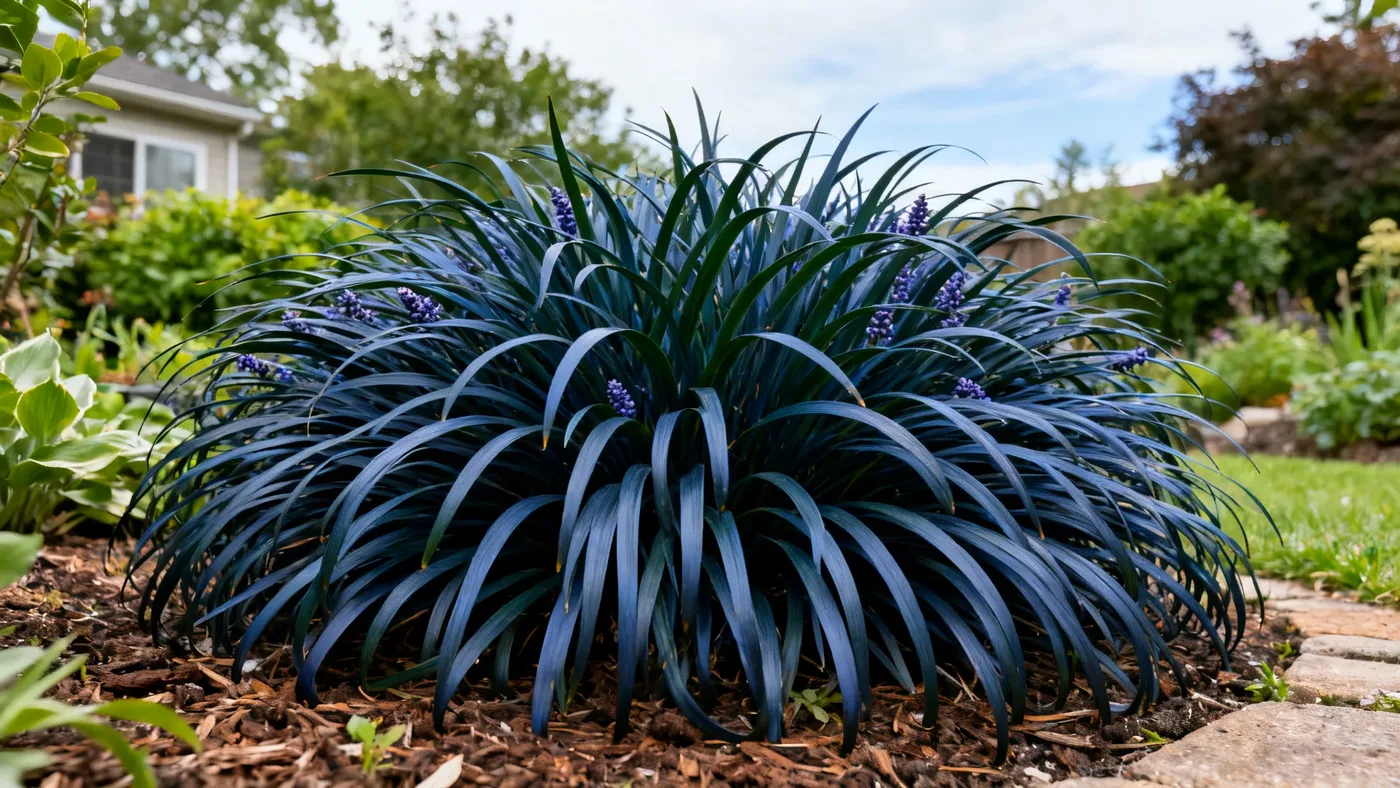
Big Blue Lilyturf Care Guide: Sun, Soil, Water and More
Big Blue Lilyturf (Liriope muscari 'Big Blue') is a low-maintenance evergreen groundcover that thrives across USDA zones 5 through 10. Whether you're using it as a border edging plant, a mass planting for erosion control, or a specimen in containers, this guide covers everything you need to keep your plants healthy and blooming reliably year after year.
Table of Contents
- Sunlight and Location
- Soil Preparation and Drainage
- Watering and Establishing Your Plants
- Fertilizing and Nutrients
- Pruning and Year-Round Maintenance
- Planting Time and Spacing
- Common Pests and Diseases
- Seasonal Care Calendar
Key Takeaways
- Big Blue Lilyturf grows 12 to 18 inches tall with an equal spread per mature clump
- Best color and density occur in part shade, but the plant tolerates full sun to full shade
- Plant in spring or fall; spacing should be 12 to 18 inches apart for borders and mass plantings
- Once established (roughly 1 growing season), the plant is drought tolerant and needs only moderate watering
- Cut back to a few inches in late winter or early spring before new growth emerges
- Evergreen year-round in zones 7-10; zones 5-6 may see foliage die back or brown in harsh winters
Sunlight and Location
Big Blue Lilyturf is remarkably flexible about light conditions. It grows successfully in full sun, part shade, or full shade. The key is understanding what each setting delivers in terms of appearance and performance.
For the best foliage color and density, choose a spot with part shade. In this environment, the dark green leaves remain vibrant and the plant forms a tight, attractive clump. Full sun is acceptable and works particularly well in cooler climates or for borders where a slightly lighter appearance is acceptable. In full shade, the plant still grows but may develop more loosely spaced foliage and produce fewer flowers.
One caveat: in intensely hot or exposed locations, full direct sun can cause leaf scorch or bleaching, especially during peak summer or in arid regions. If you live in a hot zone and notice this occurring, afternoon shade or a location that receives morning sun and afternoon shelter will help. The plant also works well under the canopy of trees, making it valuable for shaded gardens where other groundcovers struggle.
Soil Preparation and Drainage
Big Blue Lilyturf is genuinely adaptable in soil, tolerating everything from sandy loam to heavy clay. This adaptability is one reason it succeeds as a workhorse groundcover across so many regions. However, good drainage is non-negotiable.
Prepare the planting area with average, well-drained soil. If your soil tends toward clay, work in compost or aged bark to improve structure and percolation. The plant's pH preference is slightly acidic to neutral, roughly 6.0 to 7.0, but it adapts to a wider range if drainage is sound.
The most common failure with Liriope is root rot or crown rot caused by waterlogged soil. These diseases thrive in soggy conditions, especially during dormancy or in winter. If you have heavy clay or poor drainage, consider raising the planting bed 3 to 4 inches above grade or adding a perforated drain line nearby. Proper drainage matters far more than soil fertility; this plant tolerates lean soil without complaint.
Test your soil drainage before planting: dig a hole 12 inches deep, fill it with water, and observe. If water sits for more than an hour or two, amend heavily with organic matter or choose a different location.
Watering and Establishing Your Plants
Timing and consistency matter most during the first growing season after planting. Big Blue Lilyturf needs roughly 1 growing season to become established. During this period, water moderately and keep the soil consistently moist (not soggy) until the root system expands. A soaker hose or drip line is ideal; avoid overhead irrigation if possible to keep foliage dry.
Once established, big blue lilyturf becomes drought tolerant. Mature, well-rooted plants require only moderate, average water and can survive extended dry periods. In most climates, natural rainfall is sufficient once the plant is 1 year old. In arid regions or during severe drought, occasional deep watering will maintain appearance, but the plant rarely fails from dryness alone.
The real risk is overwatering. Reduce frequency in fall and winter, when growth slows and water demand drops. In containers, check soil moisture by touch; water only when the top inch feels dry. In beds, rely on rainfall and water only during prolonged dry spells.
Mulch newly planted areas with 1 to 2 inches of wood chips or shredded bark, keeping it several inches back from the crown. Mulch retains moisture during establishment, moderates soil temperature, and suppresses weeds, but excessive mulch piled against the crown can trap moisture and invite rot.
Fertilizing and Nutrients
Big Blue Lilyturf tolerates lean soil, so fertilizing is optional rather than essential. If you choose to feed the plant, apply a light application of general-purpose or slow-release fertilizer in spring as new growth emerges. A granular 10-10-10 or balanced formulation works well. Broadcast it around the base of the plants and water in lightly.
One application per year in spring is sufficient. More frequent feeding does not improve the plant and can lead to soft, tender growth susceptible to pest damage. Plants grown in poor soil benefit more from fertilizer than those in average, organic-rich beds, but even then, slow-release fertilizers are preferable to quick-acting formulations.
If the foliage appears pale or growth slows dramatically after establishment, nutrient deficiency may be at play, though it is rare. Have your soil tested through your local extension service if you suspect a problem. Iron deficiency (chlorosis) occasionally appears in very alkaline soils; a chelated iron product can help, though amending the soil pH is a longer-term solution.
Pruning and Year-Round Maintenance
Pruning improves appearance and prevents the accumulation of old, dead foliage. The standard practice is to cut back or mow old foliage to a few inches in late winter or early spring, before new growth emerges. Timing varies by climate: in zone 7 and warmer, do this in late February or March; in colder zones, wait until April when frost risk passes.
Use a string trimmer, rotary mower, or hedge shears set to cut all the way down to 2 to 3 inches. This removes winter-damaged and discolored leaves, opens the clump to air and light, and encourages fresh, uniform growth. The plant responds quickly and leafs out within weeks.
Pruning is not strictly required every year. If the foliage remains attractive and mostly green through winter, you can skip it. In zones 5 and 6, winter foliage often browns or dies back entirely, so spring cleanup is more urgent. In zones 7-10, where the plant stays evergreen, some gardeners prune annually for neatness while others leave it alone.
During the growing season, deadheading spent flower spikes is optional but extends bloom interest into late fall. The plant will eventually drop its flowers naturally and form dark berry clusters that persist into winter and attract birds.
Planting Time and Spacing
Plant Big Blue Lilyturf in spring or fall. These seasons provide mild temperatures and adequate moisture for root establishment without the stress of peak summer heat. Avoid planting in mid-summer when the ground is hot and dry, as young plants struggle to establish under those conditions.
Spacing depends on your use. For borders and edging, space plants 12 to 18 inches apart. At this spacing, clumps will merge into a continuous border within 2 to 3 years. For mass plantings on large areas, 18 inches apart is standard; closer spacing (12 inches) fills in faster but requires more plants and carries higher cost. The plant spreads slowly via short rhizomes, adding a few inches per year, so patience is needed for full coverage.
Nursery-grown plants are typically sold in quart, number 1, or number 3 containers. Quart and number 1 sizes are common for borders; number 3 plants are larger and provide faster coverage if budget allows. At planting, dig a hole slightly wider than the root ball and just as deep. Water thoroughly after planting and mulch as described in the watering section.
The plant often blooms in its first full growing season and reaches mature clump size in 2 to 3 years, becoming a long-lived perennial that persists 10 or more years with minimal intervention.
Common Pests and Diseases
Big Blue Lilyturf is generally pest and disease resistant, but a few issues can occur under the right (or wrong) conditions.
Slugs and Snails. In wet springs or humid climates, slugs and snails may chew ragged holes in foliage. The damage is usually cosmetic but can be unsightly. Hand-pick pests in early morning or evening, remove debris that shelters them, and allow soil to dry between waterings. Beer traps or commercial slug baits work if damage is severe; nematode-based biological controls are also available.
Scale Insects. Occasionally, scale insects cluster on foliage and stems, weakening the plant by feeding on sap. Heavy infestations are rare on mature, vigorous plants. Spray with horticultural oil in early spring when scales are becoming active; repeat if needed. Ensure good air circulation by not overcrowding plants.
Root Rot and Crown Rot. These fungal diseases are the most serious threat. They thrive in soggy, poorly drained soil, especially in winter or in shade. Prevention is the best cure: ensure good drainage, avoid overwatering, and mulch away from the crown. If rot appears, remove and destroy affected plants, amend the soil, and improve drainage before replanting.
Anthracnose Leaf Spot. This fungal disease occasionally causes brown spots on foliage during warm, wet weather. Prune away severely infected leaves, improve air circulation, and avoid overhead watering. It rarely kills the plant outright but can reduce appearance. Most years, especially in normal rainfall, it does not occur.
Seasonal Care Calendar
Different care tasks matter at different times. Use this seasonal guide to plan your maintenance.
| Season | Key Tasks |
|---|---|
| Early Spring (Late February to March) | Cut back old foliage to 2-3 inches. Apply slow-release fertilizer in early spring as new growth emerges. Divide mature clumps if desired. Check for winter damage and remove dead stems. |
| Late Spring to Early Summer (April to June) | Maintain consistent moisture for newly established plants. Monitor for pests like slugs and scale. Mulch bare areas between plants. Plan new plantings for early summer. |
| Mid to Late Summer (July to August) | Flowers bloom; plant is drought tolerant and requires minimal water. Deadhead spent spikes if desired. Watch for leaf scorch in extreme heat. Avoid planting in peak heat. |
| Fall (September to November) | Flowers fade and berries develop; birds feed on them. Reduce watering as growth slows. Plant new installations in fall; they establish over winter and spring. Clear fallen leaves around crowns to prevent rot. |
| Winter (December to February) | In zones 7-10, foliage stays evergreen and mostly green; in zones 5-6, foliage may brown or die back. Reduce water. Do not fertilize. Avoid walking on dormant beds. Late winter is the right time to prune in colder zones. |
Quick Reference: Big Blue Lilyturf Care Checklist
| Care Element | Recommendation |
|---|---|
| Zones | USDA zones 5-10; evergreen year-round in zones 7-10; expect dieback or browning in zones 5-6 |
| Sunlight | Part shade for best color; tolerates full sun to full shade |
| Soil | Average, well-drained soil; pH 6.0-7.0; tolerates clay if drainage is good |
| Water (Established) | Drought tolerant once established; moderate watering, no overwatering |
| Water (New Plants) | Consistent moisture during first growing season |
| Fertilizer | Light spring application of slow-release or general-purpose fertilizer; optional |
| Pruning | Cut to 2-3 inches in late winter or early spring before new growth |
| Spacing | 12-18 inches apart for borders; 18 inches for mass plantings |
| Mature Size | 12-18 inches tall and wide per clump; bloom spikes 18-24 inches |
| Bloom Time | Mid to late summer (July-August); violet-purple flowers |
| Deer Resistance | High; deer rarely browse foliage |
| Time to Maturity | Often blooms first year; full size in 2-3 years |
| Lifespan | 10+ years; divide clumps as needed to maintain vigor |