Big Blue Lilyturf Berries: Color, Timing and Display
Early autumn is when this topic gets urgent. The light drops low across the lawn, the summer perennials slump, and the border goes quiet. If you reach for the shears in that mood, you can cut away the best thing your lilyturf does all year.
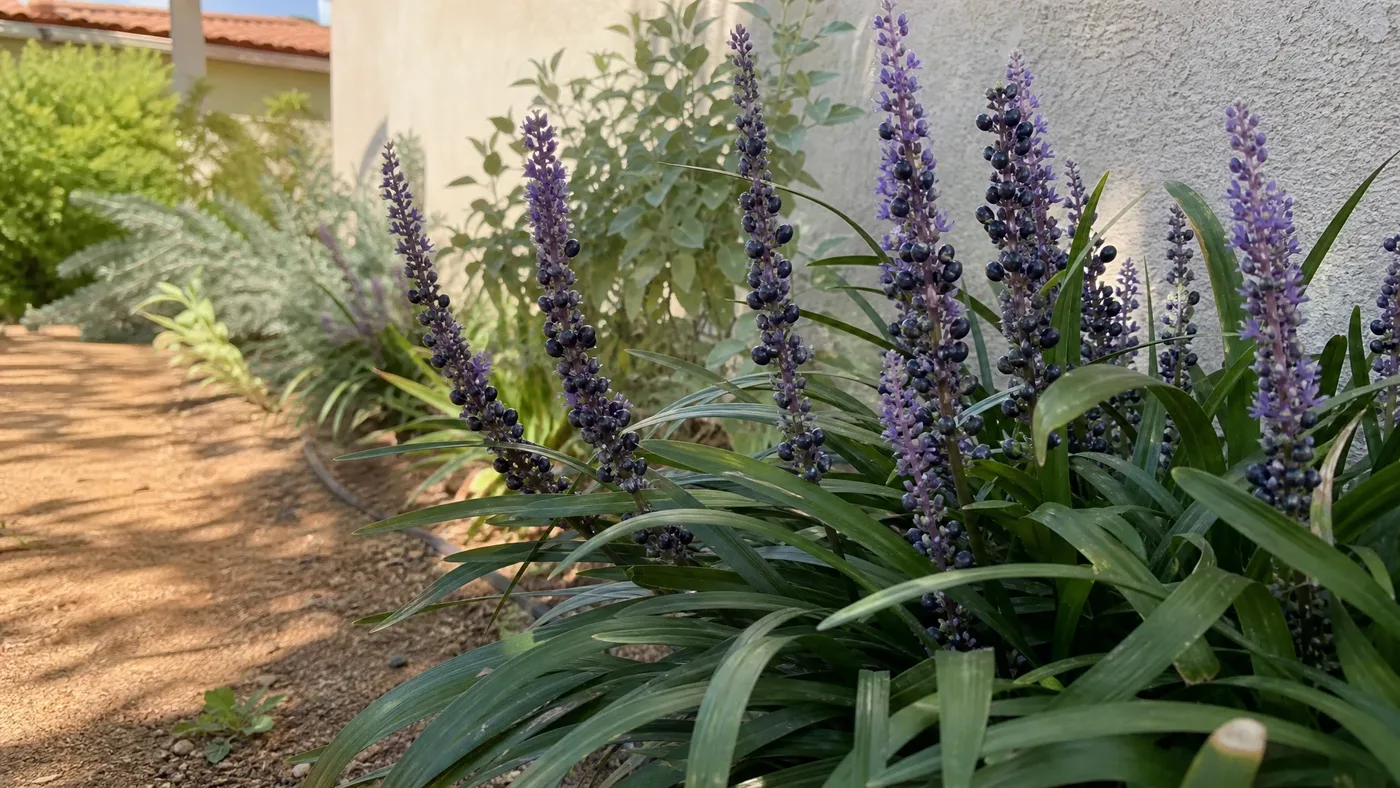
From the porch the clumps still look dark green, and standing over them are spikes that have stopped flowering and started fruiting. Big Blue Lilyturf berries are small, but they carry the planting from the last flowers into winter.
Read on for where they fit in the landscape, how a bloom spike turns into fruit, how the color shifts through the season, what a single berry looks like up close, and when to cut back so the display stays.
A Fall Border Seen From the Back Porch
Stand at the back porch rail on an early October evening and take the whole border in at once. The summer perennials have given what they had to give. Coneflower heads have gone brown, the daylilies are straw, and the hostas are yellowing at the edges, so the bed looks like a place waiting politely for frost.
What Still Holds Its Color
What holds is mostly foliage and a few stubborn late bloomers. The grasses are plumed, an aster or two is pushing through, and down at the edge of the bed the lilyturf sits as green in October as it was in May.
Big Blue is an evergreen tuberous perennial forming a dense clump of narrow, arching, leathery, dark green leaves, which is why it reads as the steady note in a fading picture.
Look closer and it is not only leaves. Above the clump stand the spikes that carried violet-purple flowers in late summer and early fall, and where those flowers finished you now find rows of small round beads. That is where late color in this border comes from. It is not a second bloom at all. It is fruit.
Why the Light Matters
Low autumn light does a great deal of the work. A high July sun flattens dark fruit into the background, but a slanting October sun catches the sheen on every berry and lays a thin line of shine along the edge of the bed. You will not have planned for it, and once you have seen it you will start planning around it.
One of the most common questions we get each fall is whether those dark beads mean something has gone wrong with the plant. Nothing has. It is the plant doing what a flowering lilyturf does next, and the rest of this guide follows that process from the first green bead to the last frosted stalk.
Where Big Blue Lilyturf Berries Fit in the Landscape
Berries are not a reason to buy a plant on their own, but they change how you use it. A lilyturf that only flowers gives you a few weeks of interest. One that flowers and then fruits still has something to say when the rest of the garden is closing down, and that should shape where you put it.
Edges and Walkways
Along a path or the front of a bed is where the berries pay best, because that is where people walk close enough to see them. A mature clump is 12 to 18 inches tall and wide, and the fruiting spikes sit at or just above the leaf line.
Walk past a row of them in October and the beads are at hand height instead of lost at the back of the border. Our guide to the best landscape uses for Big Blue Lilyturf covers the full range of edging jobs. For a berried edge the change is simple: set the clumps where the path brings people near them, not where they are merely tidy.
Masses and Drifts
In a mass planting the effect is different again. One berried clump is a detail, but a few dozen make a dark, beaded sheet under the autumn light, and the repeating spikes give a plain evergreen cover some rhythm it lacks the rest of the year.
Decide your spacing for borders, edging and mass planting before you plant, since it sets how soon the clumps knit into one carpet.
Sun, Shade and How Much Fruit
Fruit follows flowers, and flowers follow light. Lilyturf flowers are produced most freely in a sunny location.
Big Blue is listed anywhere from full sun to full shade, so a shaded clump will grow perfectly well. Just expect a lighter berry crop there than from a clump that gets sun, and put the clumps you most want to see fruiting where they get the most light.
Following Big Blue Lilyturf From Bloom to Berry
The berries are not a separate event. They are the same spikes you admired in late summer, finishing the job the flowers started, and understanding that one fact explains almost everything about timing and care.
One Spike, Two Jobs
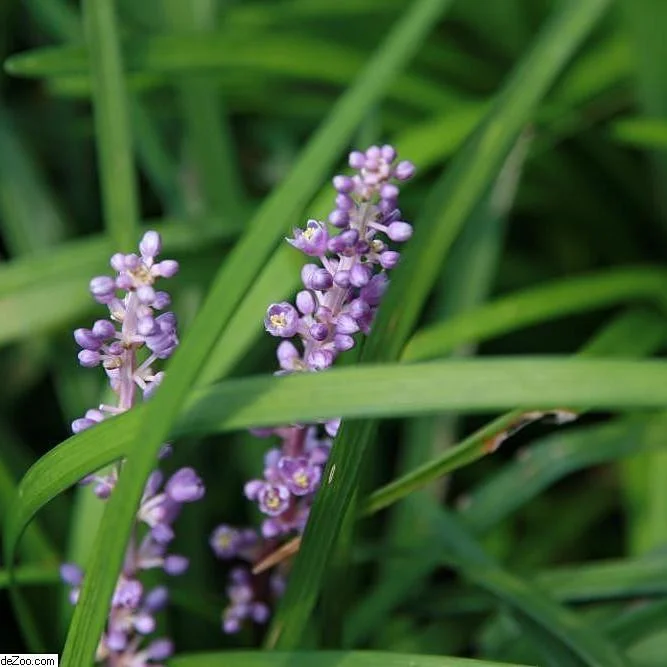
The flowers are erect, small, spike-like and purple, 6 to 8 inches tall, opening in late summer and early fall and followed by round, shiny berries.
The spikes are dense and erect, up to about 16 inches, and followed by black fruits. The height differs from the NC State figure, so expect some variation from clump to clump and from year to year.
The key point is that the stalk does not change. The stalk that held up the violet-purple flowers is the one that holds the berries, and as the petals drop, a small green bead takes the place of each flower.
If you want a closer look at the flowering half of the story, our guide to Big Blue Lilyturf blooms picks up where this one starts.
Reading a Spike in Transition
For a few weeks you can find all stages on one clump. Some spikes still carry open flowers, others show fading petals with green beads swelling behind them, and the earliest spikes may already be darkening. Nothing is wrong when this looks uneven. A clump does not finish on a schedule, and the staggered look is part of why the display lasts so long.
Why the Color Differs From the Species
The species ranges across lavender, purple, pink and white flower spikes. Big Blue is the violet-purple one, so its spikes read as one color from bloom to berry, and the dark fruit sits naturally against the flower color it replaced.
Whatever the flower color, it is the spike you protect all summer that becomes the berry display, so skip any mid-season shearing of flowering stalks.
Green in August, Blue-Black by October
This is the pattern you will most likely see, and it is a good one to hold in your head as a guide rather than a promise. The fruit starts green and ripens to shiny black, with the fruit season running through fall and winter.
The Color Sequence
The table below follows a typical clump through the season. The sources give seasons rather than calendar dates, so treat the months as a rough frame and check local conditions.
| Stage | What you see |
|---|---|
| Late summer | Violet-purple flowers open on the spikes, and the first small green beads appear as the earliest blooms finish. |
| Early fall | Flowers fade out. Green berries fill the upper spike and begin to darken. |
| Mid to late fall | Most berries have turned glossy dark. Low light shows off the sheen. |
| Winter | Berries remain on the stalks through the cold months against evergreen leaves. |
| Late winter | Time to cut the tops back, before new growth starts. |
Black or Blue-Black?
Extension sources call the ripe berry shiny black. In flat midday light that is just what you see. In low sun, or set against dark green leaves, many people read a blue cast in the black, and that is where the blue-black description comes from.
The bloom color, the foliage and the light all play into it, so do not worry if yours looks different on a gray day.
Why Timing Slides From Year to Year
Ripening follows the weather, not the calendar. Because bloom itself is placed anywhere from late summer to autumn depending on the source, berries can be green well into fall in one garden and mostly dark in another.
Where autumn arrives early, the green stage may stretch and the shiny black comes later. For the pace in your area, your local extension service is the best check.
A Single Berry Held Up Close
Pick one spike and hold it at arm's length, then bring it in close. The whole display is made of these small, repeated shapes, and they reward a second look.
Size, Shape and Sheen
The fruit is a globose berry about 1/3 inch in diameter. That makes each one about the size of a small pea, round, and glossy when ripe. A green one has a matte, waxy look. As it darkens, the surface picks up that shine, and the berries along one stalk catch light all at once.
How It Sits on the Stalk
The berries gather in a clustered column along the upper part of the spike, each carried close to the stalk instead of hanging free. That is why the spike stays upright and stiff through winter weather, holding its shape well after the leaves around it have been bent by rain or snow.
It also explains why the display holds so long: the structure does not collapse the way a loose flower head does.
Pets, Children and Seed
If you have pets or small children, you will ask about the berries. The plant is low in poison severity and there are no known cases, but caution is still wise because of the plant's relationship to known toxic plants. Our pet safety guide covers that question in full.
Cutting Back Big Blue Lilyturf or Leaving the Berries
This is the decision that matters, because the berries are only as good as the cutback date. Cut too early and you lose the display. Cut at the right time and the clump goes into spring looking clean.
Leave Them Standing Through Winter
The berries stay on the stalks through the winter months, so there is no reason to cut in fall. Common advice says to tidy everything in autumn to get ahead of the work. For this plant, that advice trades a season of interest for a bit of convenience.
We often see clumps sheared flat in October because the bed looks finished, and the berries go in the compost with the leaves.
When to Make the Cut
Cut back tops each February, before new growth begins, since pruning should happen before spring growth starts. February is a guide to the timing, not a hard date, so the real rule is simply to cut before the new shoots show.
Cut once the new growth starts and you clip the fresh tips. Our full guide to when and how to cut back Big Blue Lilyturf covers the method and tools.
If You Cannot Wait
If you need the bed to look sharp by midwinter, you can still compromise. Leave the clumps along the main sight lines standing and cut the ones at the back first. That keeps the berries where they show and moves the work earlier.
A Second Season Worth Waiting for With Big Blue Lilyturf
Treat the berries as a second season instead of a leftover. The violet-purple flowers give you late summer, and the green-to-black fruit carries you through fall and into winter. In our rows, the best mornings are the ones after the first hard frost, when every berry stalk stands rimed in white above the dark leaves.
Big Blue Lilyturf
Nursery-grown Big Blue Lilyturf in sizes from 1 GALLON, shipped to your door.
From $91.87
Shop Now →Leave them standing until late winter, then cut in February before the new growth starts. Customers tell us the berries are the part of this plant they notice last and remember longest, which is why they keep coming back to the top-quality lilyturf we grow and sell from our own farms.