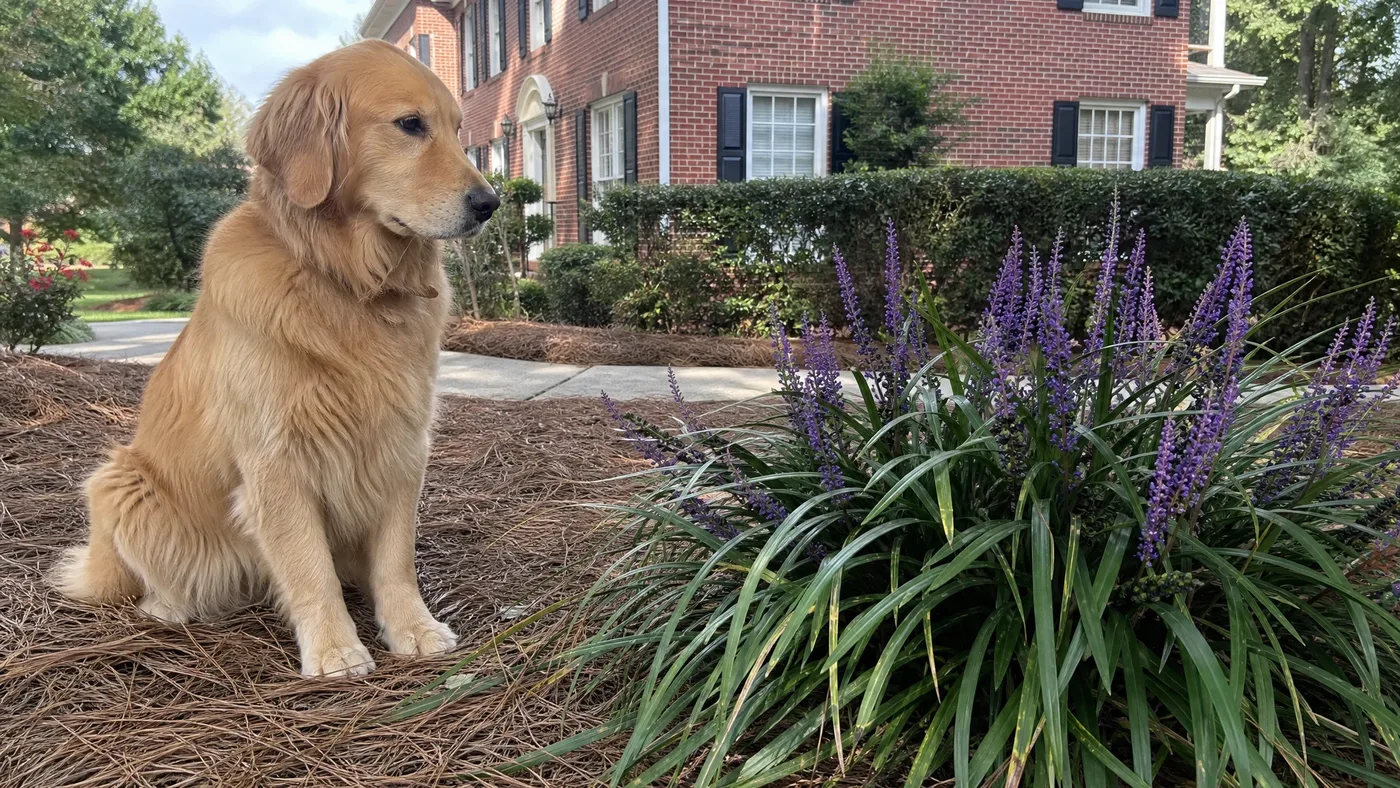
Is Big Blue Lilyturf Toxic to Dogs and Cats? Pet Safety Guide
Two veterinary databases rate Big Blue Lilyturf non-toxic to dogs and cats, and a third source still names its berries as the poison part. That mismatch is why this question never goes away. It is also why a pet owner pricing out a groundcover can end up dreading an emergency vet bill over a plant with no recorded cases against it.
One of the most common questions we get is whether Big Blue is safe around a dog. It is a fair thing to ask before planting a whole bed, because a wrong call gets repeated across every square foot.
This guide covers everything you need to know about Big Blue Lilyturf and pets, from the lily-name confusion and the berries to chewed leaves, cats versus dogs and the long-run cost of pulling the plant out.
The Belief That Big Blue Lilyturf Is Poisonous
The common belief is that any plant with "lily" in its name is a hazard to pets, and that a groundcover your dog will walk across daily must be a risk. The sources do not back that up for this plant.
The ASPCA lists lilyturf (Liriope muscari) under the name Turf Lily as non-toxic to dogs, non-toxic to cats and non-toxic to horses. The LSU veterinary toxic plants database agrees, listing Liriope muscari as non-toxic to dogs, cats and horses. Big Blue is a cultivar of that same species.
The one cautious note comes from NC State, which rates the poison severity as low and says no cases are known, with caution advised because of a relationship with known toxic plants. That is a precaution about relatives, not a record of a pet getting sick. The plant also does not cause contact dermatitis, so handling the foliage is not a concern.
Our Ruling
Big Blue Lilyturf is not a poisonous plant by the two sources that rate pets directly. The belief is mostly a name problem, and the berries are the only part worth any thought. We tell customers to plant it.
One honest limit: none of these sources tested the Big Blue cultivar on its own. They rate the species, and we have no reason to think a cultivar would behave differently.
Does the Lily Warning Apply to Big Blue Lilyturf?
Pet owners, cat owners especially, have learned to be wary of lilies, and that is good instinct for the true lilies. The trouble is that the warning follows the word, not the plant.
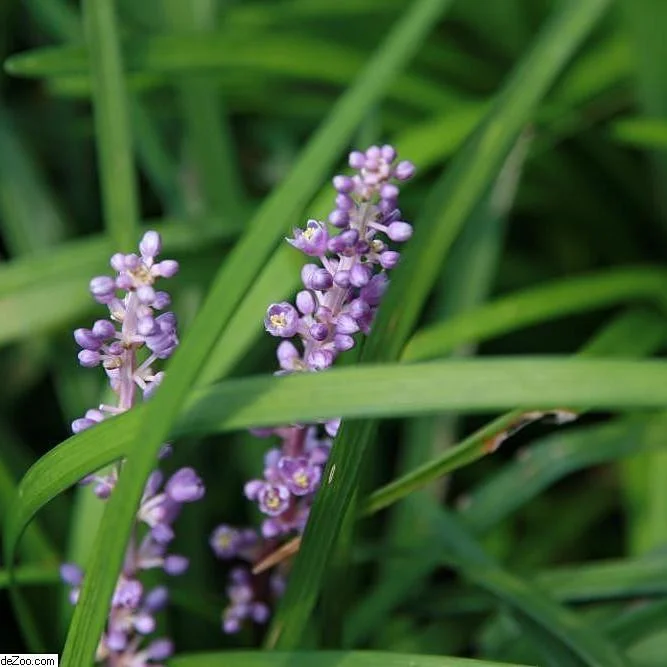
"Lilyturf" and "turf lily" are common names borrowed for a plant that looks like a lily's grassy cousin: narrow, arching, leathery, dark green leaves in a dense evergreen clump, with small spikes of violet-purple flowers. It is a different plant from the lilies behind the cat warnings, and it sits under its own botanical name, Liriope muscari.
Search by Latin Name
The practical fix is to check any plant by its botanical name, never its common one. Look up Liriope muscari by that name and you land on the right entry. Search "lily" and you land on a list that does not describe your groundcover.
We push back a little on the advice to keep everything with "lily" in the name away from pets. For true lilies it is sound. Applied to lilyturf, it sends people into ripping out a plant that two databases rate as non-toxic, and the same name trap works the other way, so verify before you buy anything new.
The caution about relatives is the one place the family connection shows up. We read it as prudence, and it is the reason the berry section below exists.
Berries Look Tempting, so Are They Dangerous?
The berries are the part that raises questions, so they get their own look. They are also the part where the sources are least tidy.
What the Berries Are
The fruits are 1/3 inch in diameter, globose berries that start green and ripen to a shiny black. They remain through the winter months. Flowering happens in autumn, so the berries follow in the same season and then hang around.
That timing matters for pets. The exposure window is not a week. It runs from autumn through winter, at a height of roughly 1 to 1.5 feet, which is nose level for a small dog.
What the Sources Say About Eating Them
The fruits are the poisonous part, and the toxic principle is unknown. The rating, as above, is low severity with no known cases. Neither rating makes an exception for berries.
No source we use describes symptoms from the berries, so we will not invent any. Our position is simple: a few swallowed berries is not a crisis, but a puppy that mouths everything is a reason to remove the berries before they form.
Cutting the Spikes Early
If you want zero berry exposure, cut the flower spikes off once the blooms fade. Our guide to Big Blue blooms covers the timing, and the plant carries on as normal. Otherwise, the usual yearly trim before spring growth clears the old berry stalks anyway, as we describe in our cutting back guide.
Chewed Big Blue Lilyturf Is Not an Emergency Visit
The next belief is that any bite of a garden plant means a rushed trip to the clinic. For this plant, that is not what the sources point to, and the cost of treating every nibble as an emergency adds up over years of dogs and gardens.
What a Mild Reaction Looks Like
The databases list no symptoms for Big Blue because they list no toxicity. What we tell customers is that any pet that eats a bunch of plant matter, from any plant, can end up with a mild upset stomach, and that is the most you should expect from chewed blades. Watch for a day. Offer water and normal meals.
The tough texture helps. Those leathery blades are not easy to swallow in quantity, so most chewing ends in a mouthful of shredded leaf on the lawn.
When to Call the Vet
Call your vet, or an animal poison hotline, if the pet keeps vomiting, turns lethargic, refuses food or seems unwell for any reason. The same goes if you are not sure what was eaten. In a garden, the culprit might be a different plant, a mulch, or something sprayed on the bed.
That last point is the one we would plan around. Fertilizer and pesticide residue on the beds is a more realistic hazard than the leaves. Follow the label on anything you apply, and our fertilizing guide keeps the amounts modest for this plant.
When you do call, give the Latin name, Liriope muscari, and mention the berries. A vet can work with that faster than with "the lily thing in the yard".
Cats and Dogs Meet Big Blue Lilyturf Differently
The toxicity ruling is the same for dogs and cats alike. The difference is in behavior, and that decides what you will actually see in the bed.
What Dogs Tend to Do
Dogs are the berry risk. They dig, they mouth things, they run through clumps and flatten them. A dog is also the animal most likely to swallow several berries at once, which is why the spike-cutting advice above is aimed at puppies and young dogs.
Clumps spread to about 12 to 18 inches wide, so a dog bounding through a planting can squash a clump but rarely uproots a mature one.
What Cats Tend to Do
Cats tend to nibble the grassy blades, much as they do with lawn grass, and then lie on the clump. Berries are less often the target. Customers usually tell us the only sign is tattered leaf tips, which is cosmetic and trimmed away at the yearly cut-back.
It helps that the plant is deer and rabbit resistant, which tells you the foliage is not a favorite for browsing animals. Our deer resistance guide explains how far that goes. Pets are another matter, and a bored animal will chew anything.
Ripping Out Big Blue Lilyturf Rarely Pays Off
This is the planner's view. Removal feels like the safe move, but you pay for it in labor, disposal and replacement plants, and then in the years a new groundcover takes to fill in.
Big Blue grows at a medium rate in a dense evergreen clump, hardy across zones 5 to 10. An established bed is already doing its job all year, holding soil and edging paths. Pulling it out means starting that clock again.
What You Buy by Removing It
You buy very little safety. Two databases already rate the plant non-toxic, so you remove something low-risk and replace it with something unknown. Any new groundcover needs its own check by Latin name, and many common choices carry their own caution.
The real saving is for the narrow case of a young, mouthy dog and a very large berry crop. For that, trimming spikes costs minutes each autumn and removal costs a season or more of bare ground.
Where Moving It Does Make Sense
If a pet digs one corner, relocate the plant there or edge the bed. Our list of landscape uses for Big Blue shows spots where foot traffic matters less. Treat that as a design fix and keep the rest of the planting.
A Calm Verdict for Pet Households
Put the findings together and the answer is steady. Big Blue Lilyturf is listed non-toxic to dogs and cats by the ASPCA and LSU, the berries are the one flagged part with no known cases, and a chewed leaf is a watch-and-wait event. The plan below costs almost nothing.
A Pet-Household Checklist
- Keep the plant, and plant it where you planned, rather than paying to avoid a risk the databases do not list.
- Cut flower spikes after bloom if you share the yard with a puppy or a dog that eats everything.
- Record the botanical name, Liriope muscari, in your phone so you can give it to a vet in one line.
- Follow product labels on fertilizer and sprays, since treated beds are the likelier problem.
- Ask your vet about your own pet if it has a health condition, because general listings cannot cover that.
If something does go wrong, treat the pet's symptoms, not the plant's reputation. Call the vet when your animal looks unwell and say what it was near.
Keep the Plant, Watch the Berries
The budget-minded answer is plain. Keep Big Blue Lilyturf, watch the berries through autumn and winter, and keep your vet's number handy. That covers the realistic risk at close to no cost, while removal spends money and years to fix a problem the sources do not describe.
Big Blue Lilyturf
Nursery-grown Big Blue Lilyturf in sizes from 1 GALLON, shipped to your door.
From $91.87
Shop Now →Every Big Blue we ship is potted, packed and sent so it arrives ready to plant, and as growers with our own farms we would rather you plant it in a bed your pets can walk through than worry over the label.