12 Best Landscape Uses for Big Blue Lilyturf in Your Yard
Big Blue Lilyturf (Liriope muscari 'Big Blue') is one of the most versatile perennials you can plant. It thrives in zones 5-10, stays green year-round in most climates, requires minimal maintenance, and deer leave it alone. That combination alone makes it valuable, but the real strength lies in how many ways you can use it in a landscape. Whether you're looking to fill a shady corner, define a border, or stabilize a slope, this plant pulls its weight. The following twelve uses show practical ways to put Big Blue Lilyturf to work in your yard.
1. Classic Border Edging Along Planting Beds
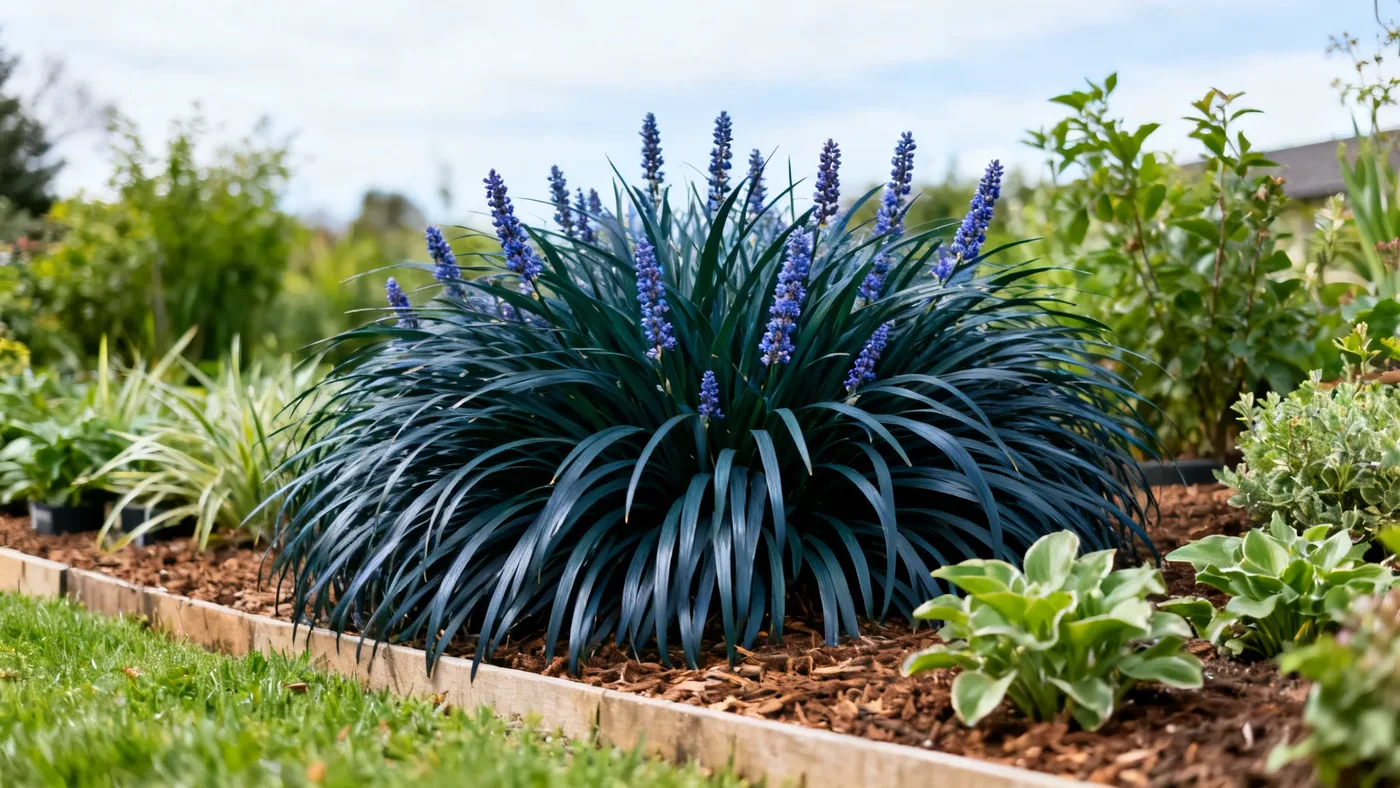
Big Blue Lilyturf was born for edging. Plant it at the front of any perennial bed, shrub border, or foundation planting where you need a clean line between lawn and soil. The dense, arching foliage forms a neat 12-18 inch mound that defines space without looking fussy. Space plants 12-18 inches apart, and they'll knit together into a continuous border within two to three years as the clumps spread slowly via short rhizomes.
The violet-purple flower spikes that rise above the foliage in mid to late summer (July-August) add a layer of texture without overpowering the display. Cut back the old foliage to a few inches in late winter or early spring before new growth emerges, and your border will look fresh and organized all season. One pass with a mower on the lowest setting does the job, or use hedge shears for more control.
Practical takeaway: Space 12-18 inches apart along bed edges for a polished, low-maintenance definition. No staking, no deadheading required.
2. Mass Groundcover Plantings for Large Areas
If you have a space wider than ten feet that needs year-round coverage without constant maintenance, Big Blue Lilyturf can handle it. Plant at 12-18 inch spacing in a staggered grid pattern, and the clumps will gradually fill in to create a seamless groundcover. Each plant reaches 12-18 inches in height and similar width at maturity, giving you a uniform, textured surface that suppresses weeds far better than bare soil or mulch alone.
This approach works especially well on slopes or in open beds where erosion is a concern. The root system holds soil in place, and once established (roughly one growing season), the plants tolerate drought well. You'll need to water through the first year, especially during dry spells, but after that, Big Blue Lilyturf asks for very little. In warmer zones (7-10), foliage remains evergreen, providing winter interest; in colder zones (5-6), expect some browning or die-back, but the plants will return reliably in spring.
Practical takeaway: Use for large-scale groundcover at 12-18 inch spacing. Best results come from consistent watering the first growing season, then drought tolerance takes over.
3. Under-Tree Planting in Shade Gardens
Tree roots compete aggressively for water and nutrients, and most perennials struggle in that environment. Big Blue Lilyturf handles it. The plant grows well under trees, especially in the part shade conditions that often exist beneath high canopies. It actually performs better with some afternoon shade; full sun can sometimes cause leaf bleaching or scorch in the hottest climates.
Pair it with proven shade companions like hostas, ferns, astilbe, or hellebores for a layered planting. Lilyturf's arching, grass-like texture contrasts beautifully with the broad hosta leaves or delicate fern fronds. Keep an eye on drainage; if your under-tree soil stays waterlogged, crown rot or root rot can develop. Well-drained soil is the key, even in shade. Work in compost or peat to improve drainage if you're dealing with heavy clay.
Practical takeaway: Shade tolerance and moderate water needs make Big Blue Lilyturf ideal for under-tree zones. Ensure well-drained soil and companion it with hostas or ferns for visual interest.
4. Slope Stabilization and Erosion Control
Bare slopes erode in heavy rain and look unfinished. A dense planting of Big Blue Lilyturf will hold the soil and look intentional from year one. The root system and spreading rhizomes knit soil particles together, especially valuable on banks where water moves quickly downhill. Plant at 12-18 inch spacing, tighter if you have a steep slope and want faster coverage.
Water regularly during the first growing season to establish a strong root system. Once established, the plants' drought tolerance means you'll rarely need to irrigate unless your region experiences a serious dry spell. The low, consistent foliage height means no competing stems that need staking or pruning for safety on a slope. In zones 7-10, the evergreen foliage provides year-round erosion control; in zones 5-6, spring emergence is reliable and will restore slope coverage after winter.
Practical takeaway: Space 12-18 inches apart on slopes, water well the first year, then rely on drought tolerance. Best results in well-drained soil.
5. Pathway Lining and Walkway Edges
Garden paths need clear definition and plants hardy enough to tolerate foot traffic nearby. Big Blue Lilyturf lines pathways beautifully. Its dense, compact growth habit doesn't flop onto pavement, and the upright foliage creates a crisp edge without spilling into foot zones. Plant one or two rows parallel to your path at 12-18 inch spacing, depending on how strong a visual line you want.
The late-summer flower display adds a bonus: visitors walking past see violet-purple spikes at eye level, creating a sense of bloom without the plants blocking the view ahead. Deer resistance is another win; pathways can be vulnerable to browsing if you plant tender ornamentals, but Big Blue Lilyturf won't be touched. Prune back in late winter as usual, and your pathway edging will look fresh and organized year after year.
Practical takeaway: Line pathways with one or two rows at 12-18 inch spacing for deer-proof, durable edges that require only annual late-winter pruning.
6. Container Plantings and Mixed Borders
Big Blue Lilyturf adapts well to container growing. It works as a stand-alone specimen in a quart or #1 container, and it's equally valuable as an edger in a large mixed planter. The arching foliage and mid-summer flowers add height and texture to containers with shade-tolerant perennials, ornamental grasses, or begonias. The compact growth habit means it won't overwhelm smaller containers or crowd out companion plants.
In containers, ensure well-drained soil (a potting mix works better than garden soil) and monitor water in summer heat. Container soil dries faster than in-ground beds. In zones 5-6, move containers to an unheated garage or sheltered location for winter, or treat them as annuals and compost the plants come fall. In zones 7-10, many gardeners leave containers outdoors year-round; the soil insulation helps roots survive cold snaps.
Practical takeaway: Use in containers as edgers or stand-alone specimens. Ensure well-drained soil and consistent water during the growing season.
7. Transition Plant Between Lawn and Planting Beds
A raw edge between lawn and beds looks unintentional. Big Blue Lilyturf creates a visual transition that says "this was planned." A single row of plants at 12-18 inch spacing softens the hard line between turfgrass and soil without creating a maintenance nightmare. Mow right up to the plants; unlike delicate perennials, Lilyturf won't shred or suffer from edge contact.
This works especially well in foundation plantings and along front borders where you want polish without fussiness. The plants stay neatly in clumps; they don't creep into the lawn or necessitate constant hand-edging. Prune back once in late winter, and the transition stays clean all year. In zones 7-10 where foliage is evergreen, the structural line holds even when surrounding perennials have died back.
Practical takeaway: Use a single row at 12-18 inch spacing to soften the lawn-bed edge. Tolerates mowing right up to the plant base.
8. Deer-Resistant Landscape Alternative
Deer browse nearly everything. Big Blue Lilyturf is one of the plants they consistently leave alone, making it invaluable if you live in a high-pressure deer area. That's not to say nothing else can survive deer, but reliable, low-maintenance alternatives are limited. When you find a plant that's deer-proof, adaptable to part shade or full sun, long-lived, and nearly pest-free, you use it.
Pair it with other proven deer-resistant plants like hellebores, astilbe, and heuchera for a full landscape that doesn't rely on fencing, sprays, or netting. The violet-purple flower spikes add a soft color note that won't attract deer or other wildlife that damage ornamentals. One application: if you've had trouble keeping perennials alive in high-deer areas, a border or mass planting of Big Blue Lilyturf offers a reset. Use 12-18 inch spacing, water the first year, then sit back and watch it establish with zero predation pressure.
Practical takeaway: Reliable deer resistance without chemical sprays or barriers. Pair with other proven deer-resistant companions for a complete solution.
9. Low-Maintenance Groundcover for Busy Gardeners
Some gardeners lack time for regular weeding, dividing, or seasonal intervention. Big Blue Lilyturf was made for them. Plant at 12-18 inch spacing, water through the first growing season, and you're essentially done for years. The plants rarely need division before ten years, require no staking or deadheading, and resist most pests and diseases if soil drains well.
Annual pruning in late winter or early spring (one pass with a mower on low setting) is the only regular task, and it takes maybe fifteen minutes per hundred square feet. No fertilizer required; the plant tolerates lean soil. No fungicide sprays, no pest monitoring, no watering after establishment. This is as close as perennials come to a plant-it-and-forget-it groundcover.
Practical takeaway: Minimal annual maintenance: late-winter pruning only. No fertilizer, pest control, or supplemental water after the first year needed.
10. Woodland Edge and Naturalized Planting
If your property borders trees or you're creating a transition between a manicured landscape and a more natural area, Big Blue Lilyturf fits perfectly at the woodland edge. Its grass-like texture reads as naturalistic, and it performs in the dappled shade you find where lawn meets forest. Stagger plantings at 12-18 inch spacing in loose drifts rather than rigid rows; this mimics how plants self-seed in nature.
Combine with shade-adapted companions like ferns, hellebores, and native wildflowers. The violet-purple flowers attract bees, adding ecological value. Once established, the plants spread slowly through natural rhizome growth, gradually filling in and softening the boundary. No aggressive spread; the clump-forming nature of Big Blue Lilyturf means it stays put and doesn't overrun neighboring plants or wild areas.
Practical takeaway: Use in drifts at 12-18 inch spacing to create a naturalized woodland edge. Clump-forming habit prevents aggressive spread.
11. Pollinator Garden Component
Bees visit the violet-purple flower spikes in mid to late summer. If you're building a pollinator-friendly landscape, Big Blue Lilyturf adds seasonal bloom when many other plants have faded. The flowers aren't showy enough to dominate a design, but they contribute reliable color and nectar during the hottest months. Plant it in drifts at 12-18 inch spacing throughout a pollinator bed for consistent bloom and texture.
Combine with other bee-friendly plants that bloom at different times: spring hellebores, summer coreopsis, fall asters. The evergreen foliage also provides winter shelter for beneficial insects in milder zones. Berries that form after flowers fade are eaten by birds, adding another layer of wildlife value to your landscape.
Practical takeaway: Mid-summer violet-purple flowers attract bees. Pair with early and late bloomers for continuous pollinator presence. Berries feed birds in fall and winter.
12. Winter Structure and Year-Round Interest
In zones 7-10, Big Blue Lilyturf remains green through winter, providing visual structure and color when most deciduous perennials have disappeared. That evergreen foliage is especially valuable in foundation plantings and entryways where you want color and texture in the dead season. In zones 5-6, expect some browning or foliage loss in harsh winters, but the plant will return reliably in spring and doesn't leave bare patches or unattractive stems behind.
Black berry clusters persist into winter after flowers fade, adding subtle texture and feeding overwintering birds. The combination of persistent foliage, lingering berries, and strong clump form means Big Blue Lilyturf pulls its weight as a year-round specimen. Even in a dormant landscape, it prevents the sense of emptiness or neglect that bare ground creates.
Practical takeaway: Evergreen in zones 7-10, semi-evergreen in zones 5-6. Persistent berries add winter interest and feed birds. Contributes year-round structure to the landscape.
Quick Reference: Big Blue Lilyturf Landscape Checklist
| Landscape Use | Spacing | Sun | Maintenance | Zones |
|---|---|---|---|---|
| Border Edging | 12-18 in. apart | Part shade to full sun | Annual late-winter pruning | 5-10 |
| Mass Groundcover | 12-18 in. apart | Part shade to full sun | Annual pruning; water year one | 5-10 |
| Under-Tree Planting | 12-18 in. apart | Part to full shade | Annual pruning; ensure good drainage | 5-10 |
| Slope Stabilization | 12-18 in. apart | Part shade to full sun | Annual pruning; water year one | 5-10 |
| Pathway Edging | 12-18 in. apart | Part shade to full sun | Annual late-winter pruning | 5-10 |
| Container Planting | One per container | Part shade to full sun | Consistent watering in summer | 5-10 |
| Lawn-Bed Transition | 12-18 in. apart | Part shade to full sun | Annual pruning; tolerates mowing | 5-10 |
| Deer-Resistant Design | 12-18 in. apart | Part shade to full sun | Annual pruning; water year one | 5-10 |
| Low-Maintenance Area | 12-18 in. apart | Part shade to full sun | Annual pruning only | 5-10 |
| Woodland Edge | 12-18 in. apart (drifts) | Part to full shade | Annual pruning; water year one | 5-10 |
| Pollinator Garden | 12-18 in. apart | Part shade to full sun | Annual pruning; water year one | 5-10 |
| Year-Round Interest | 12-18 in. apart | Part shade to full sun | Annual pruning | 5-10 (evergreen 7-10) |
Big Blue Lilyturf thrives in USDA zones 5-10 and remains evergreen year-round in zones 7-10, with semi-evergreen behavior in colder zones 5-6. The plant reaches 12-18 inches in height and width at maturity within 2-3 years, spreading slowly via short rhizomes. It blooms mid to late summer (July-August) with violet-purple flower spikes. For more in-depth care guidance, see the Big Blue Lilyturf care guide.