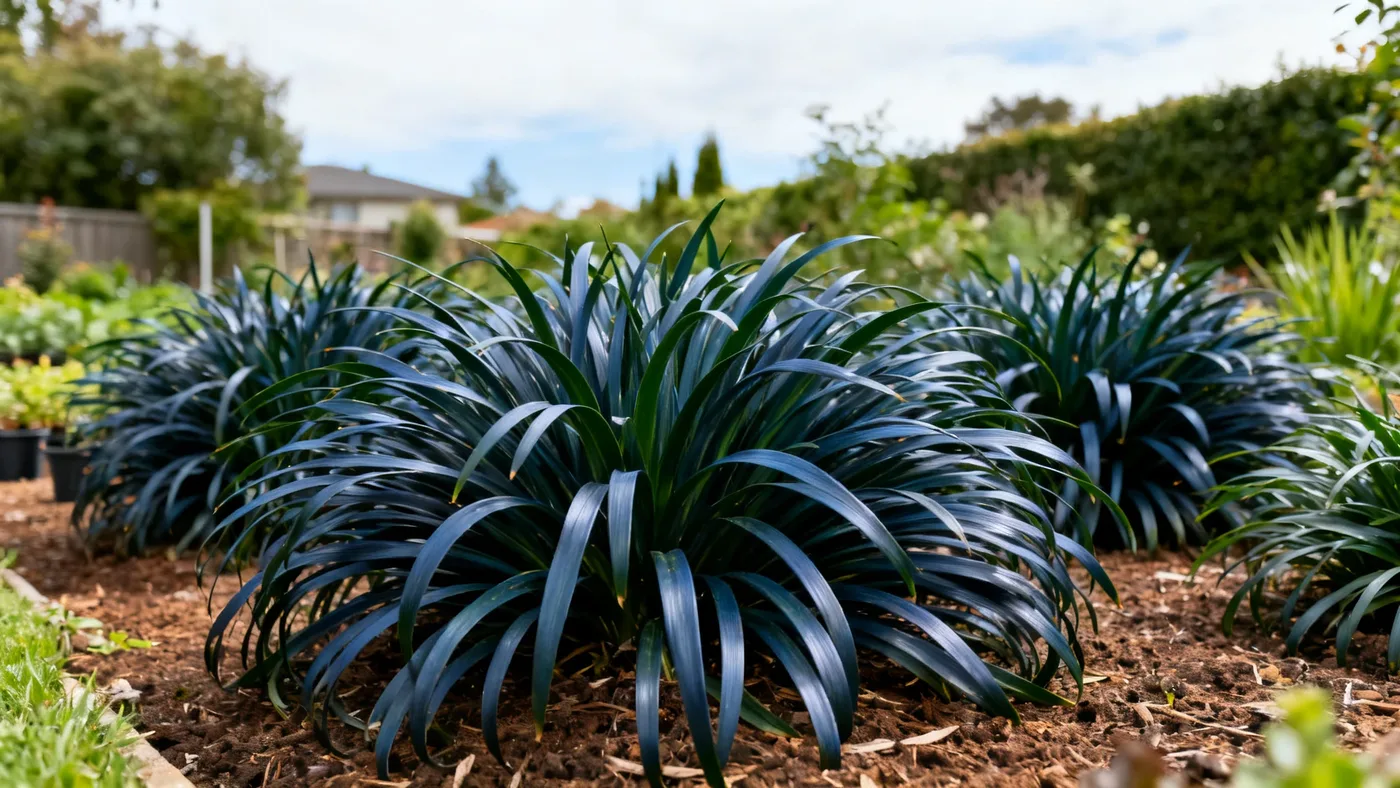
Fertilizing Big Blue Lilyturf: What, When and How Much
Big Blue Lilyturf is a low-maintenance perennial that doesn't demand much from your soil, but a light spring feeding can boost its performance. This guide walks you through the when, what, and how to fertilize without overdoing it.
Does Big Blue Lilyturf Actually Need Fertilizer?
The short answer: no, it doesn't. Liriope muscari 'Big Blue' tolerates lean soil well and will survive in poor, neglected beds without supplemental feeding. However, a light application of fertilizer in spring supports denser, more vigorous foliage and can encourage fuller blooms.
Think of fertilizing as optional insurance, not a requirement. If your garden already has decent soil or you've added compost at planting, your Big Blue Lilyturf will likely perform fine on its own. If you notice weak growth, sparse foliage, or pale leaves, a single spring feeding may help.
What Type of Fertilizer Works Best
The plant facts recommend either general-purpose or slow-release fertilizer. Each has a place depending on your situation.
General-purpose fertilizer is the standard choice for most gardeners. Look for a balanced NPK ratio like 10-10-10 or similar. These work quickly, delivering nutrients within weeks of application. They're inexpensive and widely available as granules or liquid concentrate.
Slow-release fertilizer is ideal if you prefer set-it-and-forget-it gardening. These formulations release nutrients gradually over several months, reducing the risk of over-fertilizing. They're convenient for gardeners managing multiple plantings but cost more upfront.
Avoid high-nitrogen fertilizers designed for lawns. Excess nitrogen pushes leafy growth at the expense of flowers and can make the clump loose and ungainly. Stick to balanced or slightly higher potassium formulations to encourage bloom development.
When to Fertilize Big Blue Lilyturf
Spring is the only time to fertilize. Apply fertilizer as new growth emerges, roughly when you see fresh leaves unfurling from the clump. Timing varies by region:
- In zones 7-10, where foliage stays green year-round, fertilize as soon as growth flushes in early to mid-spring.
- In zones 5-6, where foliage may brown or die back in winter, fertilize once new shoots emerge and the danger of hard frost has passed.
Late spring applications (May or June in cooler zones) also work if you miss the earliest window. The key is applying fertilizer while the plant is actively growing, not in summer, fall, or winter.
Why spring only? Fertilizing later in the season encourages tender new growth that late frost or winter cold can damage. Spring applications give the plant time to harden off before cooler weather arrives.
How to Fertilize: Step by Step
Materials needed:
- General-purpose or slow-release fertilizer (granular or liquid concentrate)
- Measuring spoon or cup if using granules
- Watering can or garden hose
- Optional: garden gloves
Steps:
- Assess your plant. Look at the Big Blue Lilyturf clump. If it looks healthy with dense green foliage and is spreading at a normal pace, fertilizing is optional. If it seems thin, pale, or slow-growing, proceed.
- Choose your product. Purchase a general-purpose or slow-release fertilizer from a garden center or online. Buy a size appropriate for your garden's scale. One bag will typically treat multiple plantings.
- Clear the base. Gently remove any dead leaves, mulch, or debris from around the clump's base with your hands or a small rake. You need access to the soil at the crown.
- Apply according to label directions. This is critical: follow the manufacturer's instructions for rate and application method. Most general-purpose granular fertilizers recommend a handful (roughly 1 to 2 ounces) per plant, scattered around the base. Slow-release products often cover more area per application.
- Water thoroughly. After applying granular fertilizer, water the area well. This helps dissolve the nutrients and move them into the root zone. If using liquid concentrate, mix and apply per label instructions, usually diluted in water.
- Replace mulch (optional). Once watered, you can restore mulch around the base if you use it. Keep mulch a few inches away from the crown to prevent rot.
- Do not repeat. One light application per growing season is sufficient. If you apply slow-release fertilizer, skip any additional feeding for that season.
Tips to Avoid Common Mistakes
Don't over-fertilize. This is the biggest pitfall. Heavy or frequent feeding produces leggy, weak growth and can promote crown rot in poorly drained soil. The "light application" in the plant facts means exactly that: restrain yourself.
Don't fertilize in summer. Feeding during hot months when the plant slows growth wastes fertilizer and can stress the clump. Wait for spring growth or early summer if you must, but avoid midsummer onward.
Don't ignore the soil. If your soil is compacted clay or heavily depleted, consider a soil test before fertilizing. Adding compost or improving drainage may do more good than fertilizer alone. Big Blue Lilyturf adapts to average, well-drained soil; if yours is soggy, fix drainage first.
Don't assume a new plant needs feeding. Nursery-grown Big Blue Lilyturf often arrives well-nourished. Wait until the second spring after planting before adding supplemental fertilizer, or only if growth looks weak.
Don't bypass the label. Different fertilizer products vary widely in concentration and application rate. Applying twice the recommended amount won't speed results and may cause harm.
What to Expect After Fertilizing
You may notice fuller foliage density within a few weeks of a spring application. Leaf color may deepen slightly. Bloom production in summer may be more abundant, though Big Blue Lilyturf flowers reliably regardless of fertilizer.
Avoid expecting dramatic overnight changes. A light fertilizer application supports the plant's natural vigor; it doesn't transform it. The real benefit is consistency over years: a well-nourished clump spreads steadily and maintains its appearance better than a truly starved one.
Combining Fertilizer with Other Care
Fertilizing works best alongside other good practices. Ensure your Big Blue Lilyturf has adequate water during its establishment year (roughly the first growing season). Once established, it tolerates moderate drought well. Pair spring fertilizing with the plant's natural preference for part shade in hot climates, and full sun to part shade in cooler regions.
For more complete care guidance, see our Big Blue Lilyturf care guide, which covers soil preparation, watering, pruning, and winter management.
Quick Reference: Fertilizing Schedule
| Task | Timing | Notes |
|---|---|---|
| Choose fertilizer product | Before planting or spring | General-purpose or slow-release; balanced NPK ratio |
| Apply light application | Early to mid-spring as new growth emerges | Follow product label rate; typically 1-2 ounces per plant |
| Water after application | Immediately following fertilizer | Dissolves granules and moves nutrients to roots |
| Second application | Never | One light spring feeding per season is enough |
| Skip fertilizing if | Anytime | Plant is healthy, vigorous, and spreading normally |
| Consider fertilizing if | Spring of second year | New planting shows weak or pale growth |