Is Big Blue Lilyturf Native? Origin and Alternatives
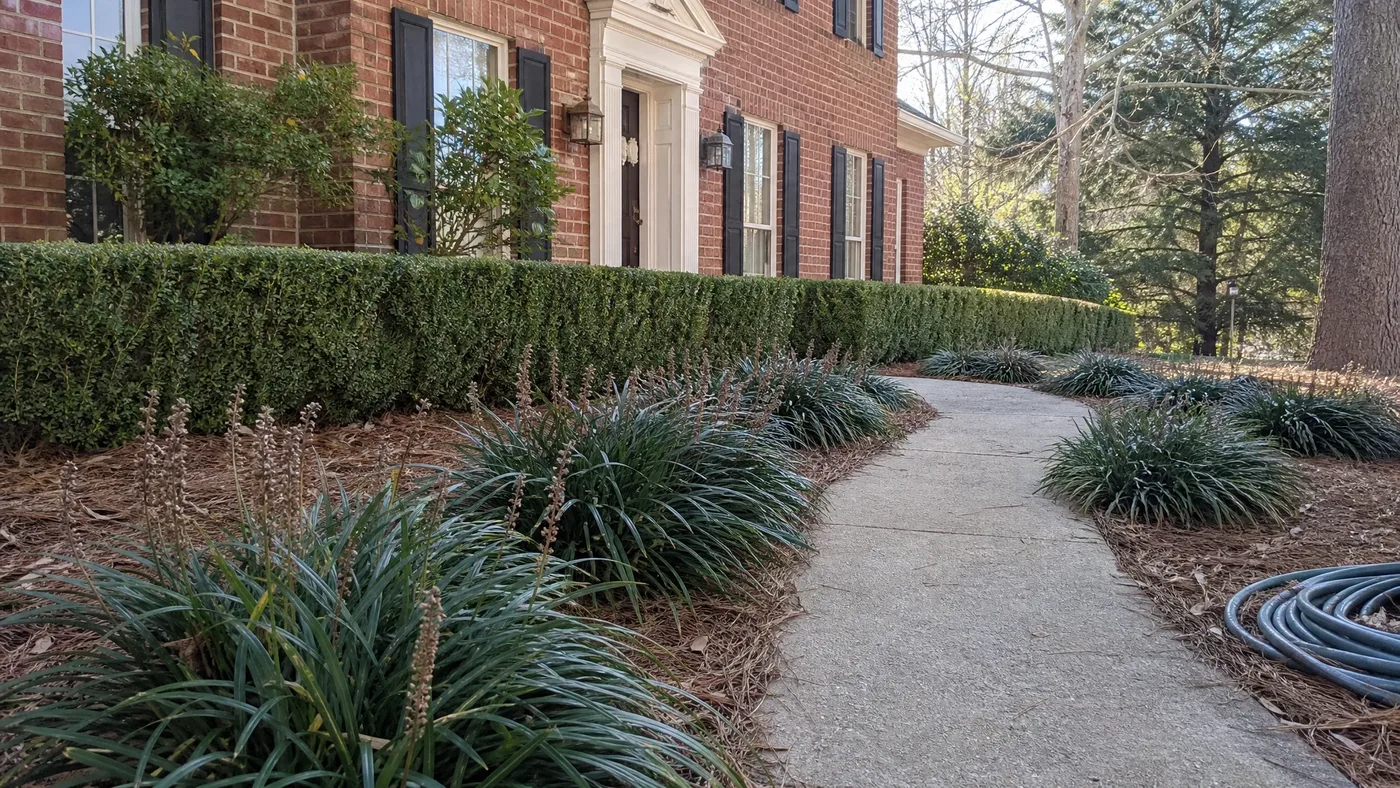
A customer at our counter asked whether Big Blue is a native plant. The answer is one word: no. Big Blue Lilyturf (Liriope muscari 'Big Blue') comes from East Asia, and it has been a fixture of American borders for so long that people assume it belongs here.
That matters more to some buyers than others. If you garden with local wildlife in mind, you want to know what you are putting in the ground and what it might do past the bed edge. We would rather you hear it from us than find a stray seedling in your neighbor's woods.
Below, you'll find out all about where Big Blue Lilyturf comes from, including how it got into American yards, what non-native means for wildlife, how it behaves at bed edges, which native groundcovers can take its place and how to mix the two in one planting.
The Name Big Blue Lilyturf Carries From East Asia
The short version of the plant's passport: NC State lists lilyturf as native to China, Taiwan and Japan, and its range entry also covers Korea and the Nansei-Shoto islands. The United States is listed as introduced. In the wild it grows in forests, shady and moist areas, near ravines and on slopes.
That is a forest-floor plant, and it explains most of what it does in your yard. It tolerates shade, puts up with a lot of neglect and keeps its leaves through winter. It was built for life under trees.
Those home conditions are worth remembering, because your driveway strip rarely looks like a moist ravine slope. Big Blue is suited to full sun to full shade and low to moderate water. That adaptability is why it sells so well, and it is also why it can settle into places you never planned for.
Why the Name Is Half Wrong
Lilyturf reads as a lily crossed with a lawn grass, and it is neither. The Alabama Plant Atlas places it in the Ruscus family, and it is an evergreen tuberous perennial with narrow, arching, leathery, dark green leaves. In the South you will also hear it called monkey grass, which gets the grass part wrong too.
What Is Known About Its Early Use
We have no source we trust for what people first used this plant for in East Asia, so we will not make up a story. What the sources do document is the garden use we still recommend: an edging plant for walkways and paths, and a ground cover in shady areas under trees or in front of shrubs.
Where Big Blue Sits Within the Species
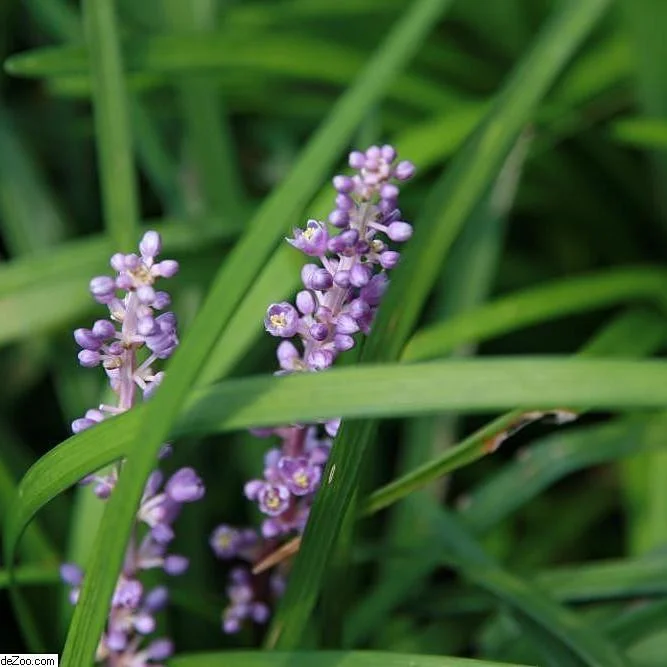
Big Blue is a selected form of the species, not a wild plant and not an American-bred one. It has violet-purple flower spikes, while the species runs through lavender, purple, pink and white. Selecting a cultivar does not change where its roots come from. A cultivar of an Asian species is still an Asian plant.
How Big Blue Lilyturf Reached American Gardens
We cannot give you an arrival year, and we will not guess one. What we can describe is why it spread. It is evergreen, forms a dense clump, grows at a medium rate and shrugs off deer and rabbits. A plant that looks tidy all year and asks for nothing sells itself to landscapers and homeowners alike.
The looks helped. Dark green, leathery, arching leaves hold the border together in every season, and the purple to lavender flower spikes arrive late in the year when many shade plants have finished. Few groundcovers give you that much for so little work.
Climate helped too. It grows in USDA zones 5a through 10b, which covers most of the country east of the Rockies and a good deal beyond. Our hardiness zone guide covers what to expect at each end of that range.
From Nursery Trade to Every Walkway
Once a plant is easy to grow, easy to divide and cheap to multiply, it ends up everywhere. A single clump can be split into several (see how to propagate Big Blue by division), so growers and homeowners passed it along for decades. Walkways, foundation beds and tree rings all ended up with a row of it.
Old Does Not Mean Native
You will hear that a plant sold for generations has "basically naturalized" and is therefore fine. We disagree. Time on the nursery shelf does not change where a plant evolved, and it says nothing about whether the local insects, birds and soil life evolved with it. Judge it by what it does in your ground.
What a Non-Native Groundcover Means for Wildlife
Native, in plain terms, means a plant that grew in your region before people moved it around, alongside the insects, birds and fungi that grew up with it. Non-native means those relationships are missing or thin. It does not mean the plant is toxic or evil. It means it is doing less ecological work than a local plant would in the same spot.
What Non-Native Does Not Mean
Non-native does not automatically mean invasive, and a lilyturf border is not an ecological disaster. Most non-native garden plants stay where they are put. The question is whether this one is among the few that do not, and for that you need to look at how it spreads, not at where it was born.
Pollinators and Insects
Big Blue carries small violet-purple spikes. We have no study showing how local pollinators use them, so we will not claim they ignore the flowers or that they matter. Ask your county extension service what visits it in your region before you decide it is a pollinator plant.
Birds and the Seed Problem
Here the sources get specific. The Alabama Plant Atlas says birds eat the fruit and spread the seed, and that the species is rapidly escaping into natural habitats where it can form a solid groundcover, excluding native species. That is the real ecological cost: not the bed you planted, but the patch of woods the birds seed.
The atlas describes the species in Alabama, and your yard may be different. But a solid evergreen mat in a woodland is exactly what native wildflowers cannot grow through.
Where Big Blue Lilyturf Stays Put and Where It Strays
The plant itself is well behaved. It grows as a clump that matures at 1 to 1.5 feet tall and wide, with Clemson putting the species at about 12 to 18 inches across. It does not run along the ground the way some groundcovers do. If it leaves your bed, it leaves by seed.
One of the most common questions we get is whether it will take over. In our rows the clumps stay clumps. The seedlings are what you watch for.
The Edges That Need Watching
Risk is highest where your bed meets something wild. Think of the back of a lot that runs into woods, a ravine, a creek bank or a wet slope. That is close to the shady, moist, sloping ground the plant grows in at home, so it has every reason to establish itself there.
Reading Your Own Site
A bed boxed in by pavement, a mowing strip and a fence line is a low-risk spot, because a seed that lands on concrete or turf goes nowhere. A bed that fades into leaf litter and trees is a high-risk spot. Walk your edge once in the fall and look at the ground a few feet past the last clump. If you find seedlings, you have your answer.
A Simple Containment Routine
- Cut the flower spikes after they bloom and before the fruit ripens, so birds have nothing to carry off.
- Pull seedlings that turn up in mulch or nearby beds while they are small.
- Never dump old clumps or divisions over the fence into woods or a ditch. Bag them or compost them hot.
- Do your main cutback before spring growth begins, as Clemson advises. Our cutback guide has the details.
Native Groundcovers Worth Planting Instead
The job to match is shade-tolerant edging that stays low and looks tidy. No single native copies Big Blue exactly, and we will not pretend one does. Big Blue is listed for full sun to full shade, which is a wide range. Most natives are narrower, so you match the plant to the spot.
The table compares four natives to the eastern US. Check that each is native to your own region with your local extension service before you buy.
| Native plant | Light and soil | Best use at the edge |
|---|---|---|
| Pennsylvania sedge (Carex pensylvanica) | Dappled sun to light shade, medium to dry soil, slightly acidic to neutral | Closest swap for the fine, grassy look along paths |
| Wild ginger (Asarum canadense) | Shade and consistently moist soil | Broad-leaved cover under trees |
| Foamflower (Tiarella cordifolia) | Shade and moist, humus-rich soil | Front of a shaded bed with spring flowers |
| Green-and-gold (Chrysogonum virginianum) | Part shade | Low, flowering edge on a woodland path |
Pennsylvania Sedge Is the Real Contender
For the lilyturf look, sedge is the one. Pennsylvania sedge runs 6 to 12 inches tall and spreads slowly by rhizomes, so it fills in without galloping off. Its limit is light. It wants dappled sun to light shade, which is narrower than Big Blue's range, so skip it in deep, dry shade.
Mind the Deer
Big Blue is deer and rabbit resistant, and that is a real selling point where browsing is heavy. We cannot promise the same for every native in the table, so ask a local nursery or your extension office how each one holds up with deer in your area. A native that gets eaten to the ground is not doing any wildlife a favor.
Pairing Natives With Big Blue Lilyturf in One Bed
You do not have to choose one or the other. A mixed bed gets you Big Blue's reliability where you need it and native plants where it counts for wildlife. The rule is to put each plant on the side of the bed it suits.
Lilyturf on the Hard Edge
Plant Big Blue along the sidewalk, driveway or patio, where pavement or a mowing strip boxes it in and seed has nowhere good to land. Space it the way our spacing guide describes. This is the job it suits best, and it does it better than almost anything.
Natives on the Wild Side
Move the natives toward the back and toward any woods or open ground. Sedge goes in dappled light, ginger under trees, foamflower where soil stays damp. Our companion plants guide has more ideas for what sits well beside the lilyturf.
Keep a gap of bare mulch between the two groups. It makes any stray lilyturf seedling easy to spot, and it keeps the native mat from blurring into the evergreen edge.
Keeping Big Blue Lilyturf Without Guilt
Our verdict is plain. Big Blue is not native, it will not feed your local ecology the way a native would, and the Alabama atlas is right to flag the species for escaping. But in a contained bed with a tidy edge, it is a low, evergreen plant that deer and rabbits leave alone and that needs little water. Keep it if it behaves, and put natives in every bed beyond it.
Big Blue Lilyturf
Nursery-grown Big Blue Lilyturf in sizes from 1 GALLON, shipped to your door.
From $91.87
Shop Now →On our farms we grow Big Blue in well-drained soil with some shade and moderate water, the conditions the sources list for it, and we handle it as a clump plant that stays where it is put.