Best Companion Plants for Big Blue Lilyturf in the Garden
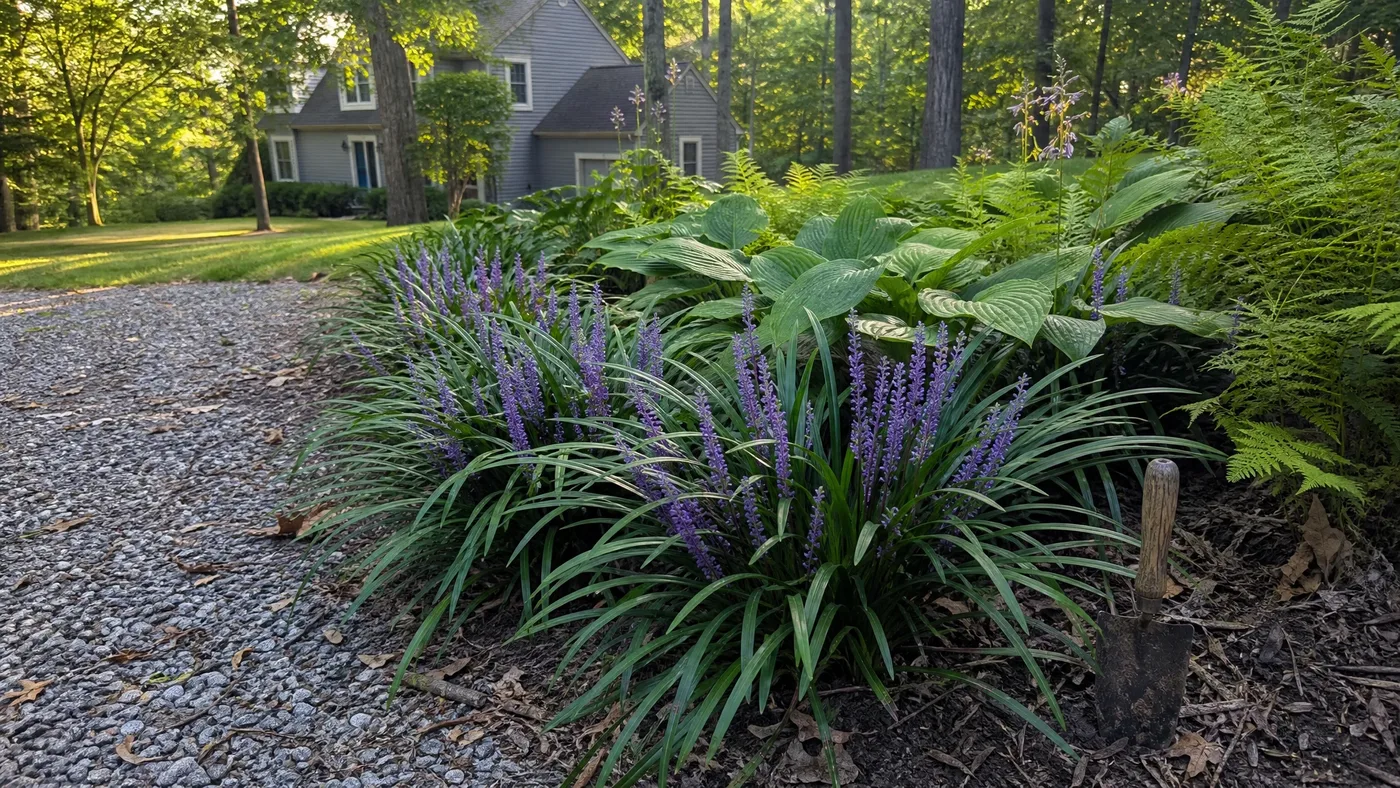
Picture a shady path edge in late summer. Spikes of violet-blue flowers rise over broad hosta leaves, and a ribbon of dark green blades follows the gravel. It looks planned, and it takes very little work. The question we hear most from customers is what else belongs in that picture.
Below, you'll find out all about companion plants for Big Blue Lilyturf, including the shade partners that suit it best, grasses and bulbs that fill the gaps, late bloomers that share its stage, the plants to keep away, and what to pair it with in sun. Choose well and the bed looks finished from March to November. Choose badly and you spend summers pulling out invaders or watering one plant to keep another alive.
Why Big Blue Lilyturf Plays Well With Others
Big Blue earns its place next to almost anything because of two traits: it stays put all year, and it flowers late. Both shape which partners work.
Evergreen Texture Is the Anchor
Big Blue forms an evergreen clump of narrow, arching, leathery, dark green leaves. Those fine blades give a bed a fixed backdrop in every season, so deciduous neighbors can come and go without leaving a hole. Hostas vanish in winter and the lilyturf stays.
The clump is compact. It stays 12 to 18 inches tall and wide, and it grows at a medium pace. It forms a clump, so it will not bully a neighbor the way a running groundcover does. You can plant close to it without a barrier.
Bloom Timing Sets the Calendar
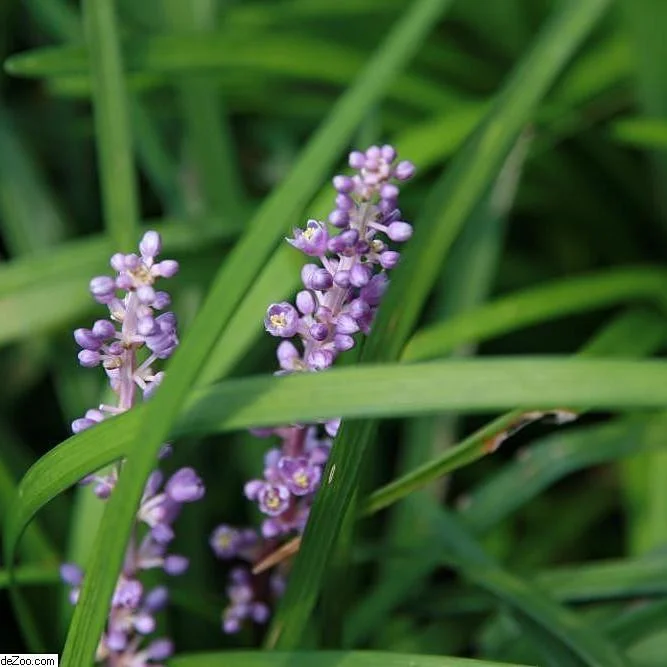
Big Blue carries violet-purple spikes from late summer into fall. Clemson's extension gives July to August for liriope in general. Your climate decides, so watch your own plants for a season before you plan around a date.
What matters is that the flowers arrive after the spring show is over. That makes Big Blue a closer for the garden year, and it pairs best with plants that peak before it or right alongside it.
Match Conditions First
It grows in clay, loam or sand, in acid to neutral soil, and the listings run from full sun to full shade. Flowers come most freely in sun. Whatever you plant beside it should want the same light and moderate water. Color and shape come second.
Hostas and Ferns for Big Blue Lilyturf in Shade
Shade is where most people put Big Blue, and the classic partners are hostas and ferns. Our guide to Big Blue in shade covers how the lilyturf itself handles low light. Here is what to plant beside it.
Hostas for Bold Contrast
Hosta leaves are broad and the lilyturf's are thin, which is the whole appeal. Put the hosta behind or beside the clump and let the blades edge the front. Hostas die back each winter, and the evergreen lilyturf covers the bare ground they leave. Blue, green and variegated hostas all read well against dark green blades.
For spacing, follow the mature width on the hosta's tag, then keep the lilyturf a hand's width outside that leaf spread. Slugs can chew young growth on both plants, so check new spring leaves after rain.
Ferns for Soft Layers
Christmas fern is our first pick. It grows 1 to 3 feet tall and its fronds stay evergreen, like the lilyturf's blades. Two evergreens with different textures give you winter interest that a hosta bed alone cannot.
It likes organically rich, well-drained soil in part to full shade. Dig compost into the fern's planting hole, not the whole bed, since Big Blue is happy in plainer ground. Leave room so the fronds arch over the edge of the lilyturf without smothering it.
Planting Tips for Shade Pairings
Set both at the depth they grew in their pots, and water them together through the first season. Our spacing guide shows how far apart to set the lilyturf itself. In dry shade under big trees, give everything extra water until the roots take hold.
Ornamental Grasses That Echo the Leaf Texture
Pairing a grass-like plant with true grasses is a design choice with two routes: repeat the texture or break it. Both work. Pick one on purpose.
Echo It With Shade Grasses
Japanese forest grass is the natural match. It grows 1 to 1.5 feet tall, the same as Big Blue, and it is deer resistant too. It blooms July to August, so the two overlap in late summer. The forest grass cascades in soft mounds while the lilyturf stays upright and dark, which keeps the echo from going flat.
Use a few repeated clumps along a path, alternating them with the lilyturf. The rhythm reads as one planting instead of two.
Contrast It With Taller Grasses
In sun, set taller, feathery grasses behind the lilyturf. The height difference makes the low clump look like deliberate edging. Choose clump-forming grasses and avoid aggressive runners. Our size guide shows what Big Blue reaches, so you can judge what will tower over it.
Light color helps. Grasses with pale or variegated blades make the dark green of Big Blue look richer by comparison. Keep the taller grass a couple of feet back so its crown does not shade the lilyturf's flower spikes.
Spring Bulbs to Fill the Early Gap
Big Blue is a late performer, so spring is when the bed looks thin. Bulbs fix that, and the evergreen leaves hide what the bulbs leave behind.
Daffodils and Crocus
Daffodils are the best fit. They bloom for 2 to 3 weeks between late winter and late spring and are deer and rabbit resistant, which matches the lilyturf. Crocus open early and sit low, so they come up through last year's blades without trouble.
Plant bulbs in fall, in drifts between and just behind the clumps. Small bulbs like crocus go in the gaps. Larger daffodil bulbs go a bit farther back.
Hide the Fading Leaves
Here is the real payoff. Daffodil foliage should not be cut back until it begins to yellow, and that ragged stage lasts weeks. Set the bulbs so the fading leaves lean into the lilyturf and the clump hides them.
Cut Back Before the Bulbs Rise
Clemson's extension says to prune liriope before spring growth begins. Do it in late winter, before the bulb shoots come up, so your shears never catch a bud. Our cut-back guide has the details.
Late Bloomers That Share Big Blue Lilyturf's Late-Summer Stage
If you want the spikes to be part of a show instead of the only act, plant perennials that flower while they do.
Sun-Loving Partners
Purple coneflower and black-eyed Susan both flower in late summer and suit a sunny edge. Their warm and pink tones sit well against violet-blue. Sedums add thick, fleshy leaves and late flowers, and they handle the same average to dry conditions that Big Blue tolerates once established.
Shade-Friendly Partners
For shadier beds, toad lily and Japanese anemone flower late and like part shade. They give you speckled or pink blooms at roughly the height of the lilyturf's spikes, so the planting stays layered instead of splitting into separate decks.
Keep the Palette Simple
Violet-blue is a cool color, and it can drown next to a dozen shades. Pair it with one or two partners in pink, white or yellow, and repeat them. In our rows, the beds that photograph best are the ones with the fewest colors. Our deer-resistance guide helps if browsing animals limit your choices.
Plants to Keep Away From the Clumps
Big Blue is easy, but it is not invincible. Some neighbors will crowd it out or compete for water, and a few minutes of planning avoids the problem.
Aggressive Spreaders
Mint, running bamboo and English ivy move in fast and smother a clump from the edges. Pulling them out later means disturbing the lilyturf's roots. If you love one of them, grow it in a container, not in the bed.
Thirsty Neighbors
Big Blue needs moist, well-drained soil and cannot take wet feet. Plants that want constant soaking will either starve or drown their partner. The table below sums up the swaps.
| Avoid | Problem | Plant instead |
|---|---|---|
| Mint, running bamboo | Spreads into and through the clump | Japanese forest grass |
| English ivy | Smothers low foliage | Christmas fern |
| Bog-lovers and plants that need constant moisture | Keeps the soil wetter than the crown likes | Hostas with decent drainage |
Planting Partners Around Big Blue Lilyturf in Sun
Big Blue handles full sun, though the foliage can look rougher and the flowers come more freely. The extra light opens up more companions, with a catch on water.
Sun Companions That Work
Coneflowers, sedums, catmint and daylilies handle sun and cope with the lilyturf's low to moderate water needs. Put the lilyturf at the front, where its low habit hides the bare stems of taller plants behind it. Taller ornamental grasses also belong here.
Water a Little More in Sun
New plants in full sun need regular water through the first season. Once established, the lilyturf tolerates dry spells, but the sun-loving neighbors may want more or less than it does. Group plants by thirst and check our watering guide for the lilyturf's own schedule. In hot, dry climates, a layer of mulch around the clumps helps.
A Planting Combination Worth Copying
Here is a bed you can plant this season: Big Blue Lilyturf, Christmas fern and one hosta. Run the lilyturf along the front as a dark green edge, set the fern just behind it for evergreen height, and place the hosta between them for broad leaves.
Big Blue Lilyturf
Nursery-grown Big Blue Lilyturf in sizes from 1 GALLON, shipped to your door.
From $91.87
Shop Now →The principle is simple. Choose partners that want the same light and water, give each one a different leaf shape, and let the evergreen lilyturf hold the bed together while the others come and go. Add daffodils in fall for spring color. On our farms, we grow Big Blue Lilyturf in well-drained ground with moderate water, and we give it a season to settle in before judging it, which is exactly what we suggest for any bed you build around it.