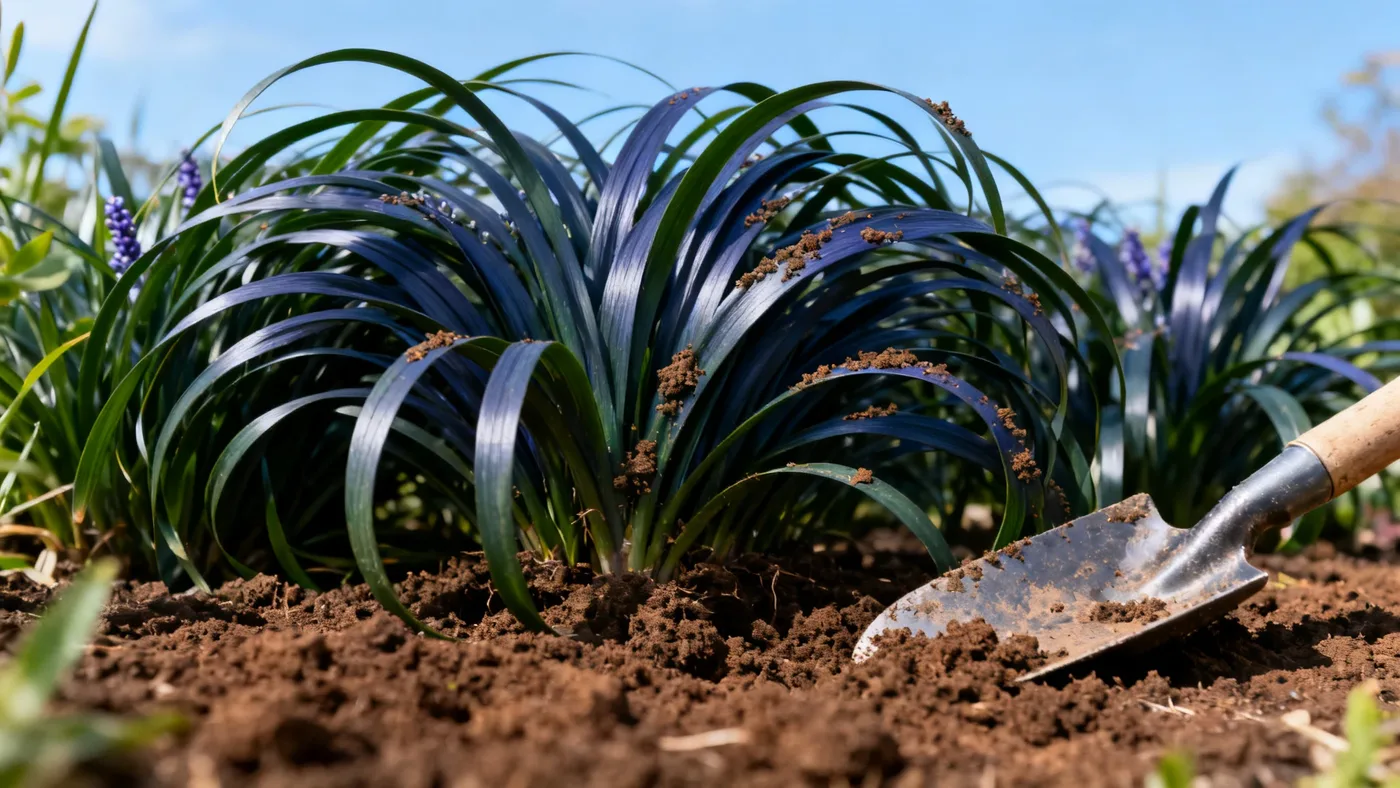
How to Plant Big Blue Lilyturf for a Thriving Groundcover
Big Blue Lilyturf (Liriope muscari 'Big Blue') is a reliable, low-maintenance groundcover that grows in zones 5 through 10. Its dark green, strap-like foliage and violet-purple flower spikes make it a practical choice for borders, mass plantings, and shade gardens where you need color and texture with minimal fuss. The key to success is understanding when and how to plant it so your clumps establish quickly and spread into a dense, attractive cover.
When to Plant Big Blue Lilyturf
The best time to plant Big Blue Lilyturf is in spring or fall, when temperatures are moderate and the soil is moist without being waterlogged. Avoid planting during peak summer heat, as young plants need consistent moisture to settle in, and high temperatures stress newly installed stock.
Spring planting, roughly March through May in most zones, gives your plants a full growing season to establish roots before winter. Fall planting, typically September through November, works equally well if your region does not experience hard freezes immediately after planting. In zones 5 and 6, where Big Blue Lilyturf is more likely to die back or brown in winter, spring planting provides a safer margin.
If you are purchasing container-grown plants, you can find nursery stock in quart, #1, or #3 containers. A quart container holds a small but viable clump, while #1 and #3 containers offer more established plants that fill in faster.
Site Selection and Soil Preparation
Big Blue Lilyturf thrives in part shade, though it tolerates full sun to full shade. For the best foliage color and density, choose a location with part shade, especially in hotter regions. The plant is highly adaptable to soil type and will grow in average, well-drained soil and even tolerates clay. This adaptability makes it valuable for challenging spots where other groundcovers fail.
Before planting, test or observe your soil drainage. If water pools after rain, amend the area with 2 to 3 inches of compost worked into the top 6 inches of soil. Big Blue Lilyturf prefers slightly acidic to neutral soil, roughly 6.0 to 7.0 on the pH scale, but it is forgiving enough to succeed in less-than-ideal pH conditions.
Clear the planting area of weeds and grass. Space plants 12 to 18 inches apart for mass plantings and borders. Tighter spacing (12 inches) creates a denser look faster, while 18 inches gives individual clumps room to spread gradually and will take longer to fill in.
Materials and Tools You Will Need
- Big Blue Lilyturf plants (container-grown, quart to #3 size)
- Compost or aged bark mulch (optional but helpful)
- Shovel or spade
- Garden gloves
- Watering can or soaker hose
- Soil amendment if your soil drains poorly (compost, peat moss, or perlite)
- Measuring tape or ruler (to ensure proper spacing)
- Mulch for top-dressing after planting (2 to 3 inches)
Step-by-Step Planting Instructions
Step 1: Prepare the Planting Hole
Dig a hole slightly wider and no deeper than the root ball of your container plant. A hole that is too deep can trap moisture around the crown and lead to rot. The goal is to plant at the same depth the plant was growing in its container, with the top of the root ball level with the soil surface.
Step 2: Loosen the Root Ball
Gently remove the plant from its container. If the roots are tightly wound or the soil is compacted, use your fingers or a small hand tool to tease apart the outer roots. This encourages them to branch outward into the surrounding soil rather than remaining in a tight ball. Do not be aggressive; you want to separate matted roots without tearing healthy ones.
Step 3: Position and Backfill
Set the plant in the hole so the top of the root ball is level with the ground. Backfill halfway with native soil, gently firm it around the base, and water lightly to settle the soil and remove air pockets. Then finish filling the hole with soil and firm gently again. Avoid pressing too hard, which can compact the soil and reduce root growth.
Step 4: Water Thoroughly
Water each newly planted clump deeply. The soil should be moist but not waterlogged. In spring, natural rainfall often provides enough moisture, but if you are planting in a dry spell, water twice a week for the first 2 to 3 weeks. In fall, water every 3 to 4 days if rain is scarce, reducing frequency as cooler weather arrives.
Step 5: Apply Mulch
Spread 2 to 3 inches of aged bark mulch or compost around each plant, keeping it a few inches back from the crown to prevent rot. Mulch moderates soil temperature, retains moisture, and suppresses weeds as your groundcover is becoming established.
Spacing and Coverage Timeline
Big Blue Lilyturf has a slow to moderate growth rate, with clumps spreading a few inches per year via short rhizomes. The plant often blooms in its first full growing season after planting, producing violet-purple spikes in mid to late summer, roughly July through August. A mature clump reaches its full size of 12 to 18 inches in height and width within about 2 to 3 years.
If you space plants 12 inches apart, expect noticeable fill-in within 2 years and dense coverage by year 3. At 18-inch spacing, complete coverage may take 4 to 5 years, but mature plants still provide effective erosion control and visual interest even during the fill-in period.
Tips for Success
Choose the right season for your zone. In zones 5 and 6, spring planting gives plants time to establish before winter stress. In zones 7 through 10, either spring or fall works equally well.
Do not plant too deep. Crown rot occurs when the base of the plant sits below soil level and stays wet. Plant level with the root ball surface, never deeper.
Establish a consistent watering routine. Big Blue Lilyturf is drought tolerant once established, which takes roughly 1 full growing season. Until then, keep the soil moderately moist. After the first year, reduce frequency significantly and rely mainly on rainfall.
Mulch but do not smother. A 2 to 3-inch layer of mulch is beneficial, but keep it a few inches away from the crown. Piled-up mulch traps moisture and invites fungal issues.
Account for mature size. Remember that each clump will reach 12 to 18 inches tall and wide at maturity. Do not plant them so close to pathways or other plants that they outgrow their space.
Common Planting Mistakes to Avoid
Planting in midsummer heat. Young plants stress in high temperatures and may wilt or fail to establish. Stick to spring and fall.
Planting too deep. Even an inch too deep can cause crown rot, especially in clay soil or during wet seasons. Plant level with the root ball top.
Overwatering. Big Blue Lilyturf tolerates dry spells once established. Soggy soil promotes root and crown rot. Water when the top inch of soil is dry, not every day.
Using poor-draining soil without amendment. If your site holds water, add compost or other organic matter to improve drainage. The plant tolerates clay but not standing water.
Spacing too far apart with unrealistic expectations. At 18-inch spacing, mature clumps do not touch for several years. If you need faster coverage, use 12-inch spacing or choose a smaller number of plants positioned to fill your design.
What to Expect After Planting
In the first growing season, newly planted Big Blue Lilyturf focuses energy on root establishment. You will see modest foliage growth and possibly flowers mid to late summer. The plant may look small in comparison to its surrounding space, which is normal.
By year 2, the clumps expand noticeably, and fill-in becomes visible, especially at 12-inch spacing. The foliage remains evergreen year-round in zones 7 through 10, while in zones 5 and 6, the leaves may bronze or brown during harsh winters but typically return green in spring.
By year 3, clumps reach mature width and height (12 to 18 inches), and a mass planting appears established and cohesive. The dense cover suppresses weeds, requires minimal pruning, and withstands foot traffic and deer pressure due to the plant's high deer resistance.
For detailed care information after planting, see the Big Blue Lilyturf care guide on sun, soil, water, and ongoing maintenance.
Quick Reference: Big Blue Lilyturf Planting Checklist
| Task | Timing or Detail |
|---|---|
| Best planting season | Spring or fall; avoid peak summer heat |
| USDA hardiness zones | 5-10 (evergreen in zones 7-10, semi-deciduous in zones 5-6) |
| Mature plant size | 12-18 in. tall and wide per clump |
| Spacing for mass plantings | 12-18 in. apart (12 in. for faster fill, 18 in. for gradual spread) |
| Expected coverage timeline | Visible fill-in by year 2; full coverage by year 3 (12 in. spacing) |
| Light requirements | Full sun to full shade; best color and density in part shade |
| Soil type | Average, well-drained; tolerates clay |
| Soil pH | 6.0-7.0 (slightly acidic to neutral) |
| Initial water needs | Moderate moisture for first growing season; drought tolerant after year 1 |
| Planting depth | Level with root ball top, not deeper |
| Mulch layer | 2-3 in., kept a few inches back from crown |
| First bloom time | Often mid to late summer (July-August) in first season |
| Bloom color | Violet-purple spikes |
| Time to full maturity | 2-3 years from planting |