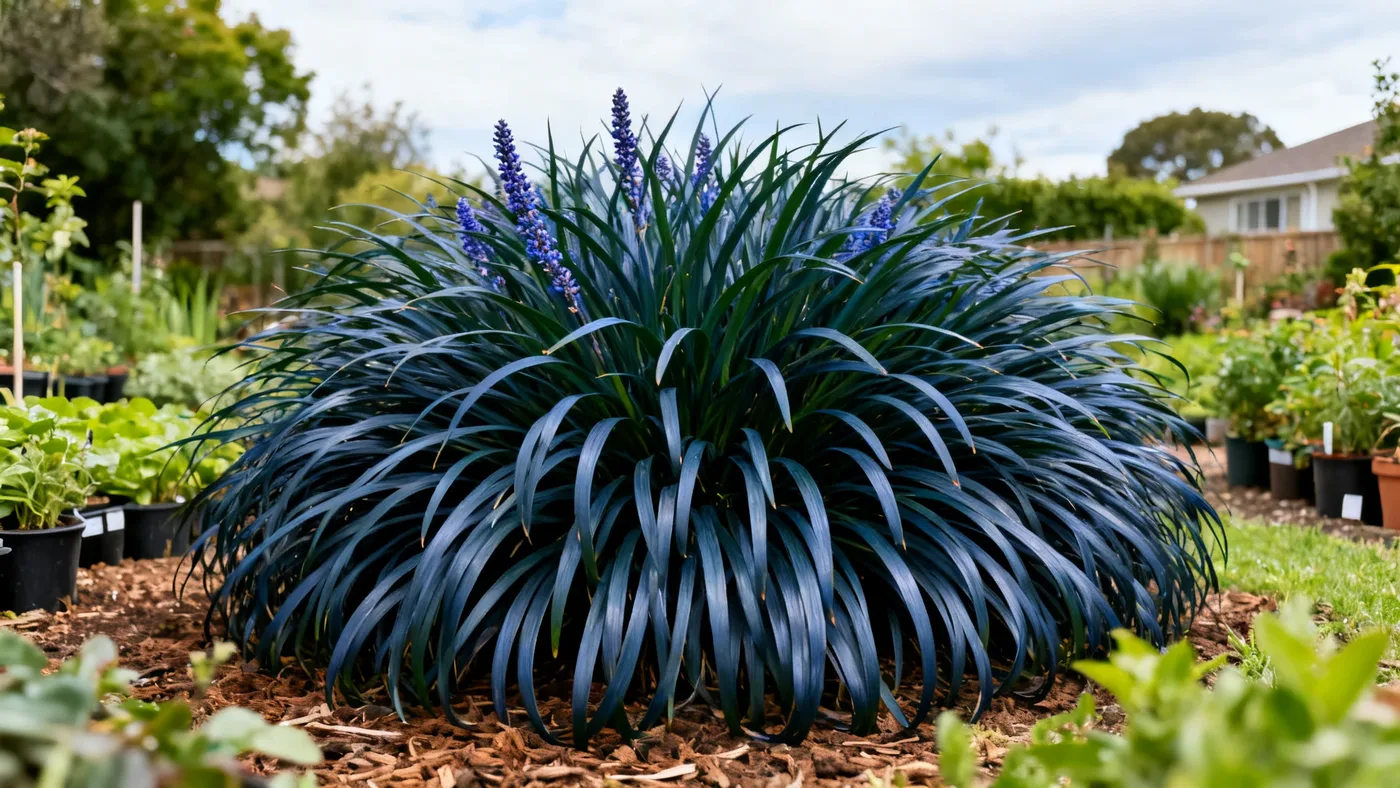
Big Blue Lilyturf in Shade: Why It Thrives in Low Light
If you have a shaded corner under your deck, a space beneath mature trees, or a north-facing border that barely sees direct sun, Big Blue Lilyturf belongs there. This plant isn't just shade-tolerant, it actually grows denser, darker green foliage in partial shade than it does in full sun. Most groundcovers falter in low light. Big Blue Lilyturf doesn't. This guide walks you through choosing the right shade for your garden, preparing the soil, and planting in a way that gives you a reliable, evergreen groundcover that will fill in and stay green year-round.
Why Big Blue Lilyturf Works So Well in Shade
Big Blue Lilyturf (Liriope muscari 'Big Blue') evolved in East Asian forests where it grows under tree canopies. That heritage shows in its behavior: it tolerates full shade without complaint and actually achieves its best foliage color and density in part shade. This means less sun damage and a more uniform, attractive appearance compared to plants that get bleached or scorched by afternoon heat.
The flowers may be less abundant in full shade than they would be in sun, but the foliage, the real reason most gardeners plant this species, will be lush, dark green, and dense enough to suppress weeds. The plant grows as a clump, spreading a few inches per year through short rhizomes, so it stays where you put it and won't take over a shade bed the way some spreaders do.
Big Blue Lilyturf also deer-resistant, so shade areas where deer browse heavily are ideal. It pairs beautifully with other shade lovers: plant it alongside hostas, ferns, astilbe, hellebores, or heuchera for a layered, full-looking garden bed.
Understanding Shade Levels for Big Blue Lilyturf
Before you plant, assess how much light your space actually receives. "Shade" means different things in different parts of the country and at different times of year.
Part shade (2 to 4 hours of direct sun per day): This is the sweet spot. Your Big Blue Lilyturf will have the darkest green foliage, the densest growth, and reliable bloom in mid to late summer (roughly July-August in most regions). Morning sun with afternoon shade is ideal. Under high, dappled tree canopies that filter light all day, your plant will thrive.
Full shade (less than 2 hours of direct sun per day): Your plant will survive and look good. Growth will be slightly slower, and flowers may be fewer, but the foliage remains evergreen and attractive. This is your fallback for truly dark corners, next to a north-facing wall or under a dense evergreen. The plant tolerates this without decline.
Preparing Your Shade Garden: Materials and Site Prep
Big Blue Lilyturf isn't fussy, but a few minutes of prep ensures faster establishment and better long-term performance.
What you'll need:
- Big Blue Lilyturf plants (usually sold in quart, #1, or #3 containers from nurseries)
- Compost or well-draining garden soil (roughly 2 to 3 inches of amendment per bed, tilled in)
- Mulch (2 to 3 inches deep after planting; use wood chips or shredded bark to suppress weeds and retain moisture)
- Gardening gloves, trowel, and watering can or hose
- Ruler or measuring tape (for spacing)
Assessing your soil: Big Blue Lilyturf adapts to average, well-drained soil and even tolerates clay. Soil pH around 6.0 to 7.0 (slightly acidic to neutral) is ideal, though the plant isn't particular. If your shade area is under a tree with compacted, root-filled soil, work in 2 to 3 inches of compost before planting. If the spot stays soggy after rain, add some coarser material (perlite or sand) to improve drainage, since root rot can develop in waterlogged conditions.
Clearing the planting area: Remove existing weeds, grass, and debris. You don't need to go deep, the rhizomes are shallow, but a clean bed speeds establishment and reduces competition. Mark out your planting zone with string or spray paint if you're installing a large border.
Planting Big Blue Lilyturf in Shade: Step-by-Step
Step 1: Space your plants correctly. For a mass planting or border, space plants 12 to 18 inches apart. This accounts for their mature width of 12 to 18 inches and ensures they fill in without crowding within 2 to 3 years (the typical time for a clump to reach full maturity). Closer spacing (12 inches) gives you denser coverage faster; wider spacing (18 inches) reduces the initial plant count and cost.
Step 2: Prepare each planting hole. Dig a hole about as wide and deep as the container your plant came in. Loosen the soil at the bottom slightly. The goal is to set the top of the root ball level with the surrounding grade, not deeper, not shallower. Planting too deep can suffocate the crown and invite rot.
Step 3: Remove the plant and gently loosen the roots. Slip the plant out of its nursery pot. If the roots are circling the inside of the root ball, gently tease them apart with your fingers. This encourages roots to grow outward into the surrounding soil rather than continuing to spiral.
Step 4: Backfill and firm the soil. Place the plant in the hole and backfill with amended soil (compost mixed with native soil if you worked any in). Press firmly to eliminate air pockets, but don't compress so hard that you compact the soil. The plant should sit firmly enough that a gentle pull doesn't lift it, but the soil should still be crumbly.
Step 5: Water thoroughly. Water each plant until the soil is moist to 4 to 6 inches deep. Shade areas generally stay wetter than sunny ones, so you won't need to water as frequently, but this first soaking settles the soil and reduces transplant shock.
Step 6: Apply mulch. Spread 2 to 3 inches of wood chips or shredded bark around (but not touching) each plant. Mulch insulates the soil, suppresses competing weeds, and helps retain moisture. Keep mulch 2 to 3 inches away from the crown of the plant to prevent rot and pest hiding spots.
Timing: Spring or fall planting works well. Avoid planting during peak summer heat, even in shade, since new plants need time to establish. Aim for early spring (after frost) or fall (at least 4 to 6 weeks before the first hard freeze in your area).
Aftercare and What to Expect
Once planted, your Big Blue Lilyturf needs routine attention until it's established, then very little.
Year one (establishment, roughly one growing season): Water during dry spells, keeping soil consistently moist but not soggy. The plant is building its root system now. In shade, this typically takes less supplemental watering than in sun. Once the plant has gone through a full growing season and started to visibly fill out, it has developed enough roots to handle drought tolerant conditions on its own.
Year two and beyond: Reduce watering to occasional deep soaks during extended dry periods. Established plants are drought tolerant and rarely need summer watering in shade, where soil moisture lingers.
Fertilizing: A light application of general-purpose or slow-release fertilizer in spring encourages growth, but Big Blue Lilyturf tolerates lean soil and doesn't demand feeding. If your soil has compost mixed in, that often provides enough nutrients.
Pruning and cleanup: In late winter or early spring, before new growth emerges, cut back old foliage to a few inches above the ground or mow it short. This isn't required every year, but it improves appearance and removes any winter-browned leaf tips. In milder zones (7 to 10), foliage remains green year-round; in colder zones (5 to 6), it may brown or die back in harsh winters, and spring cutback is more beneficial.
Expect: Flowers in mid to late summer (roughly July-August, though timing varies by region), violet-purple spikes rising slightly above the foliage to about 18 to 24 inches. Black berry clusters often persist into winter and attract birds. The foliage itself, dark green, strap-like, dense, is the main ornamental value, and in shade it stays uniform and rich in color.
Common Mistakes to Avoid
Planting too deep: The crown of the plant (where foliage emerges) should sit at or just above the soil surface. Buried crowns are prone to rot, especially in shade where soil stays wetter longer. Even a slight mound of soil around the base can cause problems.
Overwatering in shade: Shade areas retain moisture longer. Resist the urge to water every day. Water only when the soil is dry to the touch 2 to 3 inches down. Soggy soil invites root rot and fungal diseases.
Forgetting to mulch: Mulch does triple duty in shade: it suppresses weeds, retains moisture for longer periods, and moderates soil temperature. Don't skip it just because the area is shaded.
Expecting full sun performance in full shade: In deep shade (under dense evergreens or against a dark wall), your Big Blue Lilyturf will grow well but may flower less or produce thinner bloom. That's normal and not a sign of failure. The foliage will still be attractive and dense.
Spacing too close: Planting at 8 to 10 inches apart might look fuller initially, but it creates crowding that invites mildew and slug problems. Give plants room to breathe even if it means waiting an extra season for full coverage.
Big Blue Lilyturf Shade Growing: Quick Reference
| Task or Condition | Details |
|---|---|
| Best shade level | Part shade (2–4 hours direct sun); also tolerates full shade |
| Spacing | 12–18 inches apart |
| Mature size | 12–18 inches tall and wide per clump |
| Hardiness zones | 5–10 (evergreen year-round in zones 7–10; may brown in zones 5–6) |
| Soil | Average, well-drained; pH 6.0–7.0; tolerates clay |
| Water (established) | Drought tolerant; occasional deep soak during dry spells |
| Time to maturity | 2–3 years for full clump size |
| Bloom time | Mid to late summer (roughly July–August) |
| Pruning | Optional; cut back to a few inches in late winter for tidiness |
| Companion plants | Hostas, ferns, astilbe, hellebores, heuchera |
| Deer resistant | Yes |
Shade Planting Tips from Experience
Shade beds don't dry out as fast as sun-exposed soil, so mulch heavier (2 to 3 inches) only if your shade area is well-drained. If it's boggy, use less mulch and improve drainage first with compost worked into the top few inches.
Division is the easiest propagation method if you ever want to expand your planting. In spring, dig up an established clump, separate it into sections (each with a few shoots and roots), and replant at the same spacing. This works especially well in zones 7 and up, where the plant has a vigorous growing season.
Big Blue Lilyturf won't crowd out tree roots the way aggressive vines or spreading grasses do. It coexists peacefully in the understory, making it a natural choice for shaded woodland gardens, under specimen trees, and along north-facing house foundations. Once established, it asks very little and gives you reliable greenery and color where most other plants struggle.
For more details on year-round care, read our full Big Blue Lilyturf care guide. To understand how shade compares to sun for this plant, see Big Blue Lilyturf sun requirements.