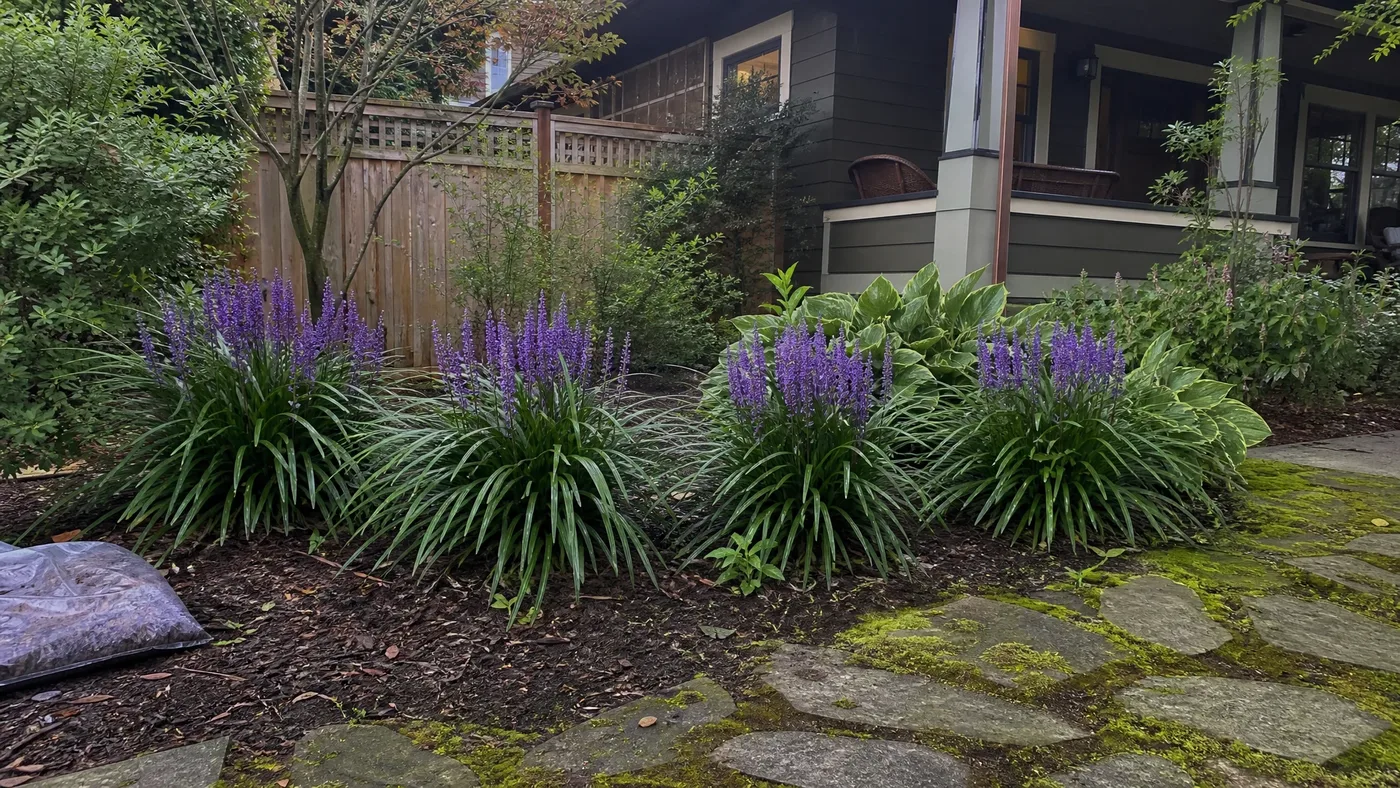
Big Blue Lilyturf vs Royal Purple and Other Liriope Cultivars
Picture late summer, low sun raking across a bed of liriope, every flower spike lit from behind like a candle. Then ask what color those spikes are. That is the real question under the one customers put to us all the time: "Is Big Blue really the best one, or should I get Royal Purple?"
The four muscari cultivars people compare most are Big Blue, Royal Purple, Super Blue and the one sold as Giant, which is Evergreen Giant. As green clumps they look much alike. Choose carelessly and you end up with white spikes where you wanted blue, or a plant taller than your border expects. If you are still weighing muscari against its cousin, start with our spicata comparison.
Read on for a verdict on color, size, leaves, cold, light and soil, and upkeep, with the cultivar we would pick in each case.
Bloom Color That Makes Big Blue Lilyturf Sing
Color is why most people end up comparing these plants, so it comes first. The spikes differ far more than the matching green clumps would lead you to expect.
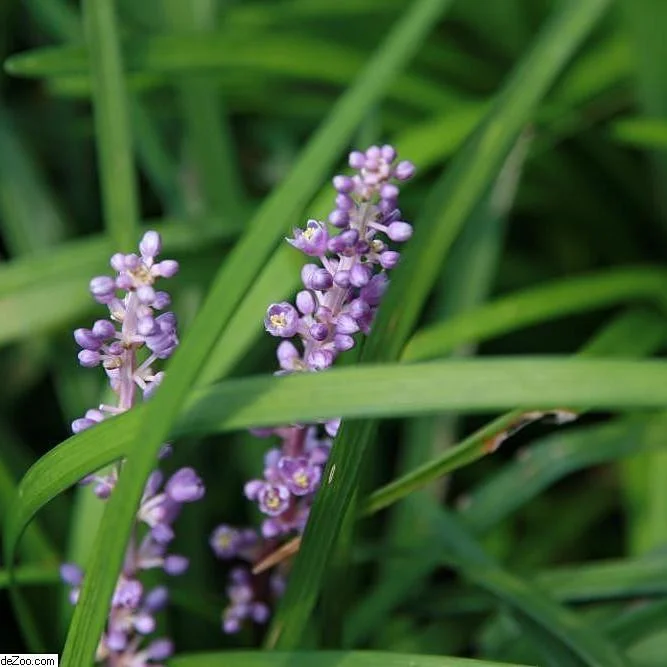
Big Blue. Clemson describes lavender flower spikes on Big Blue. It carries small violet-purple flowers packed into dense, erect spikes up to about 16 inches tall. In a border that reads as a cool blue-violet haze, and it pairs easily with almost anything you plant beside it.
Royal Purple. It has deep purple spikes. Next to Big Blue it is the darker, richer one. It shows best against pale mulch or gray stone, where Big Blue's lavender can look faint from across the yard.
Super Blue. It has upright spikes of purple-blue flowers from late summer through autumn, followed by purple-black berries. On paper it sits between the other two. We steer it toward anyone who finds Big Blue too pale and Royal Purple too heavy.
Evergreen Giant. This is the "Giant" people search for, and it breaks the pattern. It has white flower spikes. We often see customers order by a half-remembered tag color and get white where they pictured blue, so choose this one on purpose.
Timing and Berries
The group blooms on a similar schedule, from late summer into autumn. Liriope as a whole blooms in July to August, so your climate moves the dates around. Treat the cultivar differences as color, not calendar.
After the flowers come round, shiny black berries that remain through the winter months. They keep the spikes looking finished long after the color fades, which is a quiet bonus in a bed you pass every day.
One Color or Several?
Resist the urge to dot all four through one bed. Liriope looks best in drifts, and a single color per drift reads as intention. If you want a contrast, put white Giant in its own patch at the back and let a blue or purple cultivar carry the front.
Our verdict. Big Blue for the classic cool blue-violet, Royal Purple for depth, Super Blue as the middle road, and Giant only if you truly want white.
Height and Vigor Across the Four Cultivars
Size decides where each one belongs in a bed. This table gathers the figures we can source, and where a source is silent we say so instead of guessing.
| Cultivar | Mature height | Flower color | Worth knowing |
|---|---|---|---|
| Big Blue | 12 to 15 inches | Lavender | Less tendency to spread by stolons |
| Royal Purple | 12 to 15 inches | Deep purple | Matches Big Blue on height |
| Super Blue | Not listed in our sources | Purple-blue | Evergreen and clump-forming |
| Evergreen Giant | 18 to 24 inches | White | Stiff-textured leaves |
Big Blue and Royal Purple are interchangeable on height. Evergreen Giant does a different job, because at 18 to 24 inches it belongs behind shorter plants, not in front of them. Check the tag on Super Blue before you plan around it.
Spikes Against the Leaf Line
Big Blue spikes reach about 16 inches. On a 12 to 15 inch clump, that means flowers sit at or just above the leaf line instead of towering over it. The bloom reads as part of the mound, which is exactly what you want along an edge.
Vigor and Spread
Liriope muscari grows at a medium rate, and a clump spreads to about 12 to 18 inches wide. Within that, Big Blue stands out, since it has a lesser tendency to spread by stolons.
That means a tidier clump that stays where you put it. Our guide to how big Big Blue gets covers the growth curve in more detail.
Common advice says to buy the tallest cultivar for fast coverage. Height is not speed. Nothing in our sources says Giant fills in quicker, so space for the width and not the height.
Our verdict. Big Blue for edges and front rows, Giant for the back of a bed, and Royal Purple as an equal partner to Big Blue.
Leaf Width and Foliage Texture
Leaves are on show twelve months a year, long after the flowers are gone. Our sources do not give leaf widths in inches, so we compare texture and habit instead of quoting numbers we cannot back up.
Big Blue. It is an evergreen, dense clump of narrow, arching, leathery, dark green leaves. That arch is the point. The blades fall outward like a fountain, which softens a walkway edge or the line where a bed meets lawn.
Super Blue. It has dark green, strap-shaped leaves on an evergreen, clump-forming plant. It is close to Big Blue in effect, a tidy dark mound, and we would not pick between them on foliage alone.
Evergreen Giant. It has stiff-textured leaf blades. Stiff leaves hold themselves more rigidly than Big Blue's arching blades, so the planting looks more upright and formal. That suits a structured bed and works against a relaxed, spilling edge.
Royal Purple. The references we use do not describe its leaves any differently from Big Blue's. If foliage matters to you, set pots side by side before you buy and run a hand over them.
How Each Reads in the Border
Dark, leathery leaves make a calm backdrop, and that is the real job of liriope. Big Blue gives you a soft green ribbon that lets the flowers of other plants stand out above it. Giant gives you a green wall with more presence and less movement.
Because the leaves stay put through winter, the shape of the clump matters more than any bloom. Picture the bed in January and choose the habit you would still like to look at.
Our verdict. For soft edging and mass planting, Big Blue's arching dark green blades are hard to beat. Choose Giant when you want leaves that stand up and read as a sharp, deliberate line.
Cold Hardiness Where Winters Bite
Cold is where we are most careful about claims, because the cultivar-level data is thin. Here is what the sources do and do not support.
NC State lists USDA zones 5a through 10b for Liriope muscari. That is a wide span, and it is the range we can stand behind for the group.
None of our sources gives Big Blue, Royal Purple or Giant its own zone limit, so we will not invent one. Our Big Blue hardiness zones guide goes deeper on the plant we know best.
What to Do at the Cold Edge
In zone 5 and the colder end of zone 6, ask your local extension service which muscari cultivars do well in your area, and plant where the clump gets some shelter. Big Blue and Super Blue are both described as evergreen, so expect leaves to look tired after a hard winter and plan a spring trim.
The black berries on the stems give a little winter interest while you wait for new growth.
Our verdict. It is a tie. No source separates these cultivars on cold, and anyone who tells you Giant is hardier than Big Blue, or the reverse, is going beyond the evidence. In zones 7 through 10 you can pick on color and size alone.
How Big Blue Lilyturf Handles Shade and Soil
This is where the group is at its most forgiving. The one real trade-off is flowers.
Light
This plant takes full sun to full shade, and Big Blue is suited to partial shade. Flowers are produced most freely in a sunny spot.
So any of the four will live in shade, but expect fewer spikes there. If bloom is the goal, give the clump a few hours of direct sun. Our guide to Big Blue in shade covers the dim end of the range.
White spikes show up better in a dark corner than lavender does, which is the best argument for Giant in deep shade.
Soil
Big Blue grows in clay, loam or sand, in acid or neutral conditions. The species takes both acid (below 6.0) and neutral (6.0 to 8.0) pH. That is a wide window, and it means you rarely need to amend for pH.
What the plant will not accept is wet feet. It needs moist, well-drained soil, and a leaf and crown rot caused by Phytophthora palmivora can set in when drainage is poor. Our guide to the best soil for Big Blue has the drainage details.
Water
Water needs are low to moderate, so there is no reason to overwater these in an effort to help them. Heavy clay that stays soggy is a bigger threat than a dry week.
Our verdict. Another tie, with the caveat that our sources describe Big Blue most fully. Choose on color and height, then fix the drainage instead of switching cultivars.
Upkeep Demands in Big Blue Lilyturf Beds
These are plant-it-and-leave-it perennials, and the cultivar changes the chores less than you might think. The work comes down to one haircut, a rare division and a few things to watch.
Trimming
It is important to prune liriope before spring growth begins. Cut the old foliage to the ground in late winter, ahead of the new shoots, and the clump returns fresh and even.
Our guide to cutting back Big Blue walks through the timing. Giant has the most leaf to remove, simply because it is the tallest.
Spread and Division
Big Blue's lesser tendency to spread by stolons means less edge patrol. Clumps get dug and divided when you want more plants, not because they are escaping. Our sources do not rank the others on this point, so watch them over the first two seasons.
Pests and Problems
Big Blue is generally trouble-free and disease-free, with possible slug damage on young growth. Anthracnose (reddish-brown spots on leaf margins and tips) and liriope scale can affect the genus. The plant is also deer and rabbit resistant.
None of these sources sort the problems by cultivar, so what we say about common Big Blue problems applies across the group. Good drainage and a late-winter trim head off most of them.
Our verdict. Big Blue and Royal Purple take the same minimal effort. Big Blue gets a slight edge for edging, since it behaves more tidily. Giant means more to cut back but no extra skill.
Picking Big Blue Lilyturf or a Rival
Hardiness, light and soil barely separate these four, so the choice comes down to color and height. Our default is Big Blue: an arching dark green mound, lavender spikes and the least inclination to wander. Big Blue suits the gardener who wants a calm blue-violet border, Royal Purple the one chasing the richest color in the bed, Super Blue the one who wants something in between, and Giant the one who wants tall white spikes in the back.
Big Blue Lilyturf
Nursery-grown Big Blue Lilyturf in sizes from 1 GALLON, shipped to your door.
From $91.87
Shop Now →Customers come back to us for Big Blue because it settles in evenly, blooms every late summer and asks for one haircut a year. We are growers with our own farms, and that steady performance is what we look for in every top-quality lilyturf we raise.